Most decorated · 6 medals and honours, 4 for gallantry
Major Keith Caldwell
Keith 'Grid' Caldwell, born in Wellington and raised in Auckland, was New Zealand's highest-scoring fighter pilot of the First World War, with 25 victories. He commanded No. 74 'Tiger' Squadron in 1918 and holds four gallantry awards: the Military Cross, the Distinguished Flying Cross, a Bar to the DFC and the Belgian Croix de Guerre. All four are now confirmed in the London Gazette.
6medals and honours
4of them for gallantry
His medals and honours
Won for gallantry
Gallantry award
Military Cross
Spring to summer 1917 (the citation is undated) · Western Front, Arras and Douai sector, France · Second Lieutenant (temporary Captain), RFC Special Reserve, No. 60 Squadron RFC
Gazetted: Supplement to the London Gazette, issue 30287, 17 September 1917, p. 9565 (also Edinburgh Gazette 13143, 19 September 1917, p. 1977)
Caldwell won his Military Cross as a flight commander in No. 60 Squadron, flying French-built Nieuport scouts from the Arras front. He had been made a captain and given a flight in February 1917, and he led from the front. The citation singles out one patrol in which he took five machines against twelve German aircraft and drove every one of them down out of control. It also records that he had by then destroyed five enemy machines and fought more than fifty combats in the air, and it credits him with splendid skill and fearlessness. The victory list on The Aerodrome fits that picture. In June and July 1917 he claimed a run of Albatros scouts around Vitry, Douai and Graincourt, several of them shared with other pilots. Two stories from this period are often repeated. On 28 May 1917 a German pilot whom Caldwell later believed to be Werner Voss stuck to him until he faked a spin and pulled out just above the ground. On another day, Billy Bishop wrote, Caldwell flew eight miles over the lines with both guns jammed, just to bluff off seven Germans who were attacking Bishop. The award appeared in the Gazette of 17 September 1917, after he had been posted home to England as an instructor.
Wikipedia gives the Gazette issue as 30387 and its text garbles the date; the Gazette itself shows issue 30287. Sources differ on when he left 60 Squadron (Cambridge Air Force: 11 August 1917; The Aerodrome and Wikipedia: October 1917, and The Aerodrome credits him with an S.E.5a victory on 15 September 1917).
Counted in his gallantry totalSource: London Gazette 30287 p. 9565 (read); Edinburgh Gazette 13143 p. 1977; The Aerodrome; Cambridge Air Force
Gallantry award
Distinguished Flying Cross
4 September 1918 · Western Front, Lille area, France · Captain (acting Major), No. 74 Squadron RAF
Gazetted: Supplement to the London Gazette, issue 31046, 3 December 1918 (dated 29 November 1918 in the Gazette index), p. 14319 (also Edinburgh Gazette 13363, 5 December 1918, p. 4471)
By September 1918 Caldwell was commanding No. 74 Squadron, the S.E.5a unit nicknamed 'Tiger Squadron', and he made a point of flying offensive patrols himself, which squadron commanders were not expected to do. The Distinguished Flying Cross citation, headed with the word France, calls him a fine fighting airman of courage and determination. It describes a single action on 4 September 1918. He and one other machine, on offensive patrol, attacked four Fokker biplanes and he drove one of them down. The citation says he had accounted for five enemy machines, a figure well below the modern tally, which has him at 19 victories by that date (the same Fokker D.VII is logged as destroyed south of Lille at 7.30 pm). The note beneath the citation records that his Military Cross had been gazetted on 17 September 1917. In September and October 1918 he went on to add a string of Fokker D.VII claims north of Courtrai and near Lille. The medal arrived in the Gazette of 3 December 1918, just over three weeks after the Armistice.
The Cambridge Air Force page dates the award to 2 November 1918; the Gazette itself shows 3 December 1918 (issue dated 29 November). The citation's 'five enemy machines' is lower than the totals on The Aerodrome.
Counted in his gallantry totalSource: London Gazette 31046 p. 14319 (read); Edinburgh Gazette 13363 p. 4471; The Aerodrome victory list
Bar: a second award
Bar to the Distinguished Flying Cross
Not stated (no individual citation was printed) · Western Front (No. 74 Squadron's 1918 service) · Captain (acting Major), No. 74 Squadron RAF
Gazetted: Supplement to the London Gazette, issue 31098, 1 January 1919 (dated 31 December 1918 in the Gazette index), p. 96 (also Edinburgh Gazette 13378, 6 January 1919, p. 76)
The Bar is confirmed in the Gazette. Page 96 of the 1 January 1919 supplement sets out a list headed Awarded a Bar to the Distinguished Flying Cross, with three names: Captain (Acting Major) Keith Logan Caldwell, M.C., D.F.C.; Lieutenant (Acting Captain) Robert Halley, D.F.C.; and Lieutenant (Acting Captain) Thomas Walter Nash, D.F.C. It is a bare list of names, with no citation, so the Gazette does not say what the Bar was for. The Cambridge Air Force page quotes the reason only as for distinguished service, which cannot be checked against the page we read. What can be said is context. The award came a month after his DFC and covers a period when he was commanding No. 74 Squadron through the autumn fighting over Lille, Courtrai and the Lys. He claimed a string of Fokker D.VIIs from 17 September onward and fought his last combat on 30 October 1918, a Fokker D.VII shot down at Kwaremont. The squadron went on to be credited with more than 200 German aircraft in under eight months. Treat the context as background, not as the stated reason.
This was the award flagged as unsourced in the earlier check. It is now sourced to the Gazette: the earlier researcher missed it because The Aerodrome lists only MC and DFC. The citation text is not printed, so the reason is unknown. Cambridge Air Force's date of 31 December 1918 matches the Gazette index date; the supplement itself is headed 1 January 1919.
Counted in his gallantry totalSource: London Gazette 31098 p. 96 (read); Edinburgh Gazette 13378 p. 76; Te Ara DNZB; NZHistory; Wikipedia infobox
Foreign gallantry award
Croix de Guerre (Belgium)
Not stated (valuable services in connection with the war) · Belgian front and Flanders (No. 74 Squadron's 1918 area of operations) · Captain (acting Major), No. 74 Squadron RAF
Gazetted: Eighth Supplement to the London Gazette of 11 July 1919, issue 31457, 15 July 1919, p. 8987
This is a foreign award that the King allowed him to wear, not a British one. On 15 July 1919 an Air Ministry notice gave unrestricted permission for officers and men of the Royal Air Force to wear decorations conferred by foreign heads of state for valuable services in connection with the war. The Belgian section opens with Leopold orders for senior officers, then lists the Croix de Guerre (Belgian), and Caldwell is on page 8987 as Captain (Acting Major) Keith Logan Caldwell, M.C., D.F.C., 74th Squadron. His colleagues from the squadron, F. W. Gillet, F. S. Gordon and A. C. Kiddie, are listed with him. No specific act is cited, so there is no story of a single deed behind it. The squadron's 1918 war was fought largely over the Ypres salient and Flemish towns such as Roulers, Houthulst Wood, Courtrai and Ledeghem, and Caldwell's last victory came at Kwaremont in Belgium. That is the likely context, but it is an inference.
Earlier research had no Gazette reference; this one is now found. The Cambridge Air Force page's description of the Croix de Guerre as Belgium's highest military honour is not repeated here; the Gazette does not say that.
Counted in his gallantry totalSource: London Gazette 31457 pp. 8986-8987 (read); The Aerodrome medals list; Cenotaph; Te Ara DNZB
Every other medal and honour (3)
British War Medal1916-1918The standard campaign medal for officers who served overseas in the war. He crossed to France in July 1916 and served at the front until late 1917, then again in 1918.Victory Medal1916-1918The Allied Victory Medal for those who served in a theatre of war. Entitlement follows from his service in France with Nos 8, 60 and 74 Squadrons.Mentioned in DespatchesDespatch of Field Marshal Haig, 9 April 1917 (per Cambridge Air Force), Not identified · Western FrontHis name, as 2nd Lt. (temp. Capt.) K. L. Caldwell, Special Reserve, appears among the Royal Flying Corps names on page 4754 of the 15 May 1917 supplement, a list of mentions in Sir Douglas Haig's despatch. A mention…
His story
Wellington, Auckland and the bank
Born in Wellington on 16 October 1895, the son of merchant David Robert Caldwell and Mary Dunlop McKerrow. The family moved to Auckland. He went to King's College, Rose Hill in England and Wanganui Collegiate, where he rose in the school cadets, and then worked as a clerk at the Bank of New Zealand in Auckland. His attempt to enlist in the NZEF in 1914 was turned down.
Source: Te Ara DNZB; Cambridge Air Force
Walsh brothers' flying school
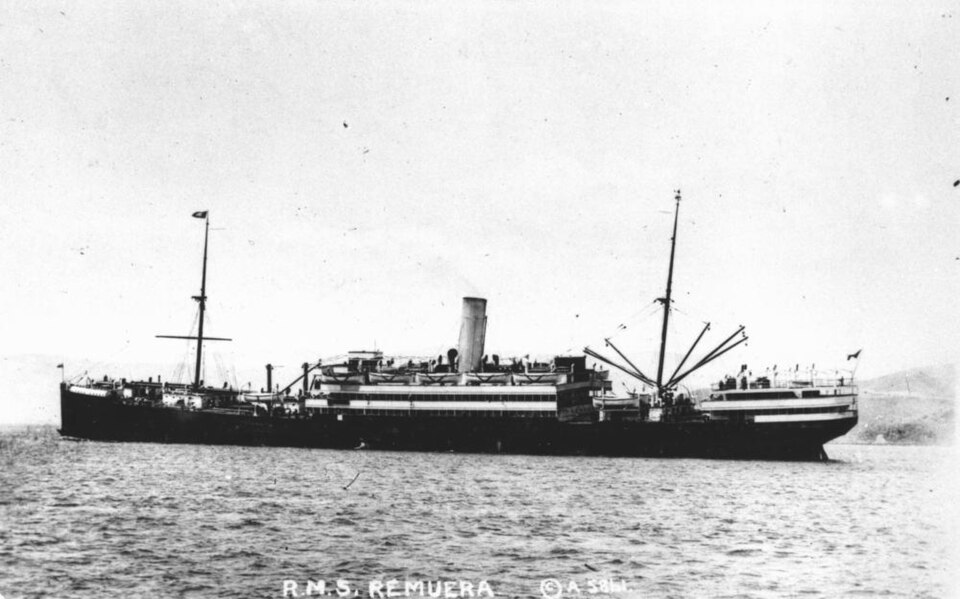
He paid £100 to join the first course at the New Zealand Flying School on the Kohimarama foreshore, learning on the Walsh brothers' flying boats. He and Geoffrey Callender were the only two of six starters to finish. He sailed from Wellington on SS Remuera on 4 January 1916.
Source: Cambridge Air Force; Wikipedia; NZHistory
Commissioned in the Royal Flying Corps; No. 8 Squadron
He was commissioned a second lieutenant, RFC Special Reserve, on 15 April 1916 (the Gazette printed the list on 18 April), trained at Oxford, Norwich and Sedgeford, and joined No. 8 Squadron at Arras on 29 July 1916, flying B.E.2 two-seaters. On 18 September he and observer Captain P. E. Welchman shot down a Roland C.II near Grevillers.
Source: London Gazette 29552 p. 4027; Cambridge Air Force; The Aerodrome
No. 60 Squadron and the Military Cross
Transferred to No. 60 Squadron (Nieuports), he was made a flight commander and captain in February 1917. He scored steadily in June and July 1917, and earned the Military Cross, gazetted 17 September 1917, after going home to instruct.
Source: London Gazette 30287; The Aerodrome; Cambridge Air Force
Instructor in England
He instructed at Ayr and then at the Central Flying School at Upavon, and was promoted to major to command No. 74 Squadron.
Source: Cambridge Air Force; Te Ara DNZB
Commanding No. 74 Squadron
The squadron went to France at the end of March 1918 on S.E.5a scouts, flew its first sortie on 12 April from Clairmarais, and was credited with over 200 German aircraft in under eight months. Mick Mannock was one of his flight commanders. Caldwell led patrols himself and claimed 16 of his 25 victories with the squadron. He fought his last combat on 30 October 1918.
Source: Te Ara DNZB; The Aerodrome; Wikipedia
Collision and a jump from the wing
A collision with another S.E.5a (Wikipedia names Sydney Carlin) wrecked his aircraft; he climbed out onto the wing, tried to balance and steer, and jumped clear just before it hit the ground near the British lines. Accounts differ on the heights involved. He was never wounded in the war.
Source: Cambridge Air Force; Wikipedia
Awards and home
The DFC was gazetted on 3 December 1918, the Bar on 1 January 1919 and the Belgian Croix de Guerre on 15 July 1919. He moved to the RAF Unemployed List on 17 July 1919, sailed home via Sydney and reached Cambridge on 29 August 1919.
Source: London Gazette 31046, 31098, 31457; Cambridge Air Force
Farmer, Aero Club founder and RNZAF commander
After a year at his father's firm he took up farming at Glen Murray in the Waikato. He helped found the Auckland Aero Club in 1928 and commanded the Territorial Air Force from 1930 until 1937. In WW2 he commanded RNZAF stations Woodbourne and Wigram, led the NZ mission in India, and headed RNZAF headquarters in London before retiring as air commodore in March 1946.
Source: Cambridge Air Force; Te Ara DNZB; Wikipedia
Rank and insignia
The ranks he held, and the badge a soldier of that rank wore. These are simplified illustrations.
Cadet second lieutenant8 October 1914 · Wanganui Collegiate cadetsShoulder strap: one pipSecond Lieutenant15 April 1916 · RFC Special ReserveShoulder strap: one pip
Temporary CaptainFebruary 1917 · flight commander, No. 60 SquadronRank badge not drawn for this entryActing Majorearly 1918 (Wikipedia says February; Cambridge Air Force says March) · commanding No. 74 SquadronShoulder strap: crown
Transferred to RAF Unemployed List17 July 1919Rank badge not drawn for this entry
His ships
SS RemueraTroopship / liner to EnglandLeft Wellington on 4 January 1916 to join the Royal Flying Corps (Cambridge Air Force). The ship in which he returned in 1919 is not named in the pages read.StateLibQld 1 171371 Remuera (ship) · Public domain · Wikimedia Commons
Afterwards
Caldwell came home in August 1919, worked briefly for his father's firm, and then took up farming at Glen Murray in the Waikato, breeding Angus and Jersey cattle. He married Dorothy Helen Gordon, sister of 74 Squadron pilot Fred Gordon, on 16 May 1923, and they had four children. He was a founding member of the Auckland Aero Club in 1928 and its first club captain, and stayed involved for the rest of his life. He was a senior member of the part-time New Zealand Air Force from 1923 and commanded the Territorial Air Force wing from 1930 until he resigned in 1937. In 1960, with Ronald Bannerman and Leonard Isitt, he helped form the New Zealand 1914-1918 Airmen's Association.
In the Second World War he rejoined the RNZAF (15 November 1939), commanded No. 2 Flying Training School at Woodbourne until June 1942, then Wigram until late 1944, and was an honorary aide-de-camp to the Governor-General from 1943. In December 1944 he went to India as head of the New Zealand mission to RNZAF personnel there, was made a CBE, and was promoted acting air commodore in April 1945 before taking charge of RNZAF headquarters in London. He retired from active service on 18 March 1946 as air commodore, with reserve status to 1956. He died of cancer in Auckland on 28 November 1980, aged 85. He was cremated at Purewa and his ashes were buried at Glen Murray beside his wife. He is remembered through a diorama at the Omaka Aviation Heritage Centre showing his step off the crashing S.E.5a, an Auckland Museum display with a Spandau gun he took from a Fokker D.VII, and Adam Claasen's biography 'Grid' (Massey University Press, 2024).
Later awards, not counted here: Commander of the Order of the British Empire (CBE), 1945 New Year Honours; Efficiency Decoration (ED); War Medal 1939-1945; New Zealand War Service Medal; King George V Silver Jubilee Medal, 1935 (interwar).
This is the Service Record sign as we would make it from his record: his rank, name, regiment, number and date of embarkation. The medals on the sign are worked out automatically, so the medals listed above are the ones to rely on.
The Service Record
Photograph
We haven’t hosted a photograph here
Rather than copy someone else’s image onto our own site, we’d rather send you to see it where it’s properly held: his full record at the Auckland War Memorial Museum’s Online Cenotaph.
RESOLVED: all four gallantry awards are confirmed in the London Gazette (MC 30287 p9565; DFC 31046 p14319; Bar to DFC 31098 p96; Belgian Croix de Guerre 31457 p8987). The Bar and Croix de Guerre references were found by searching the Gazette for his full name; The Aerodrome omits the Bar. gallantryCount = 4 is verified.
The Bar to the DFC is listed with two other officers and no citation text is printed, so the reason is unknown. The Croix de Guerre is also a bare list entry with no citation.
Wikipedia gives the MC Gazette as issue 30387 and garbles the date in its quote template; the correct issue is 30287 (p9565).
Date conflicts: Cambridge Air Force dates the DFC to 2 Nov 1918 (Gazette: 3 Dec 1918, issue dated 29 Nov); he left 60 Squadron in August 1917 (Cambridge) or October 1917 (Aerodrome, Wikipedia); his 74 Squadron command began February (Wikipedia) or March 1918 (Cambridge).
The DFC citation says he had accounted for five enemy machines; modern lists credit him with about 19 by 4 September 1918. Victory tallies also differ between sources: Wikipedia 11 destroyed + 2 shared + 1 shared captured + 10 OOC + 1 shared OOC = 25, which matches The Aerodrome list; NZHistory says 13 destroyed incl. 2 shared.
Mentions in despatches: sources agree on two. The first is in the Gazette of 15 May 1917 (p4754, RFC list; despatch date from Cambridge). The second was not traced. Not counted.
Service numbers: Cenotaph gives 1122 (WW1) and 1075 (WW2); Cambridge Air Force gives NZ1075 for the RNZAF. Officers of the RFC had no army number, so 1122 is probably an NZ record number; I could not confirm what it is.
WW1 campaign medals (British War Medal, Victory Medal) are inferred from his service; I did not see a medal index card, and the Cenotaph lists none. totalMedalsCount of 6 = 4 gallantry + 2 campaign; mentions are listed separately.
Retirement: active RNZAF service ended 18 March 1946 (Cambridge Air Force); Te Ara and NZHistory say he retired in 1956, which matches the end of his reserve service.
Sources not read in full: Papers Past (blocked by bot protection), Archives NZ service file, Claasen's book. The Gazette statement of the CBE (LG 36866) is from Wikipedia and not read by me.