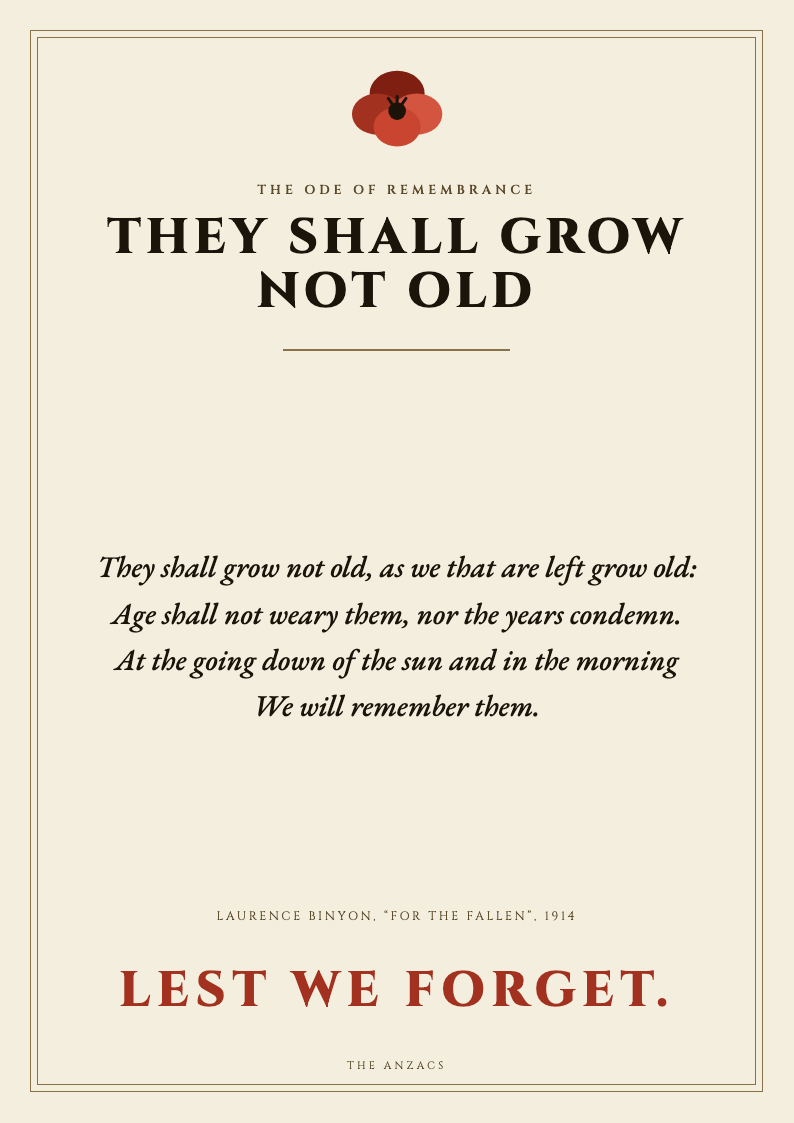
The Ode of Remembrance
The four lines said at every dawn service, set large.
We will remember them.
They went with songs to the battle, they were young,
Straight of limb, true of eye, steady and aglow.
They were staunch to the end against odds uncounted,
They fell with their faces to the foe.They shall grow not old, as we that are left grow old:
Age shall not weary them, nor the years condemn.
At the going down of the sun and in the morning
We will remember them.
Give us a WW1 service record and we print it on light, tough corflute: a memorial sign for the gate, the wall or the lawn. Every name, number and date on it is your soldier’s.
Shown with the Online Cenotaph record of Trooper Eric Herbert Meadowcroft, great-grandfather of the site’s creator and designer, Guy Hollister. Read his story.
The Native Contingent · The Māori Pioneer Battalion
Māori went to the First World War as volunteers, first as the Native Contingent at Gallipoli, then as the Māori Pioneer Battalion on the Western Front, building and mending roads, trenches and defences, often under fire. Rarotongan and Niuean men served alongside them.
If your whānau had a man in the Contingent or the Pioneer Battalion, start here and fill in his record below.
Te Hokowhitu‑a‑Tū
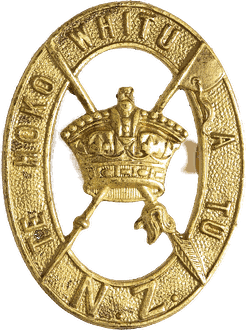
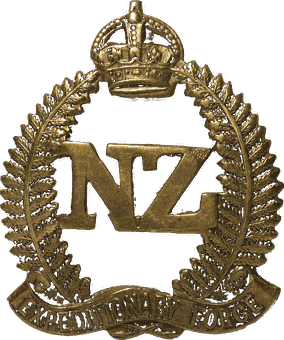
Pioneers: they built and repaired roads, trenches and defences. Their service records are online.
Honour a Pioneer Battalion soldierA different battalion, a later war
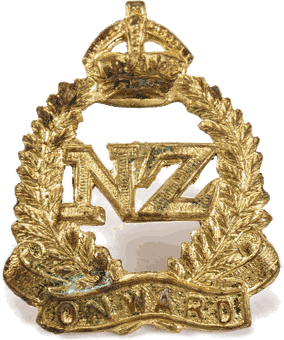
An infantry battalion of the Second World War. Those service files are not online, but if your whānau has his details you can type them into the form below and we will make his sign from what you have.
Their courage will never be forgotten. Your whānau’s part in winning our nation’s freedom is something to be proud of, now and always.
Fill in a WW2 soldier by handEvery WW1 personnel file has been digitised and is free to read. Search by name or regimental number at Archives New Zealand. The Auckland Museum Online Cenotaph is the quickest way to find a regimental number.
Copy across the details you can see: name, number, unit, dates, ship. Leave out anything the file doesn’t show. The sign builds itself as you type.
Pick one design or several. The medals are worked out from the embarkation date and what happened to him, the way the force issued them.
Send it through and you’ll get a proof to check against the record before anything is printed.
WW2 files aren’t online. If your soldier served later, get in touch and we’ll set it up from what you have.
Select from three memorial signs, each in bronze, black or dark blue.
Each names your soldier on it, and one record fills every design.
Type what the service record shows. Only the surname, given names and unit are required. Everything else is optional, and anything left blank is simply left off the sign.
Laurence Binyon’s “For the Fallen”, written in 1914, is the poem the Ode of Remembrance comes from. Download it, print it at home or at any print shop, and put it on your wall beside your soldier’s sign.
The four lines said at every dawn service, set large.
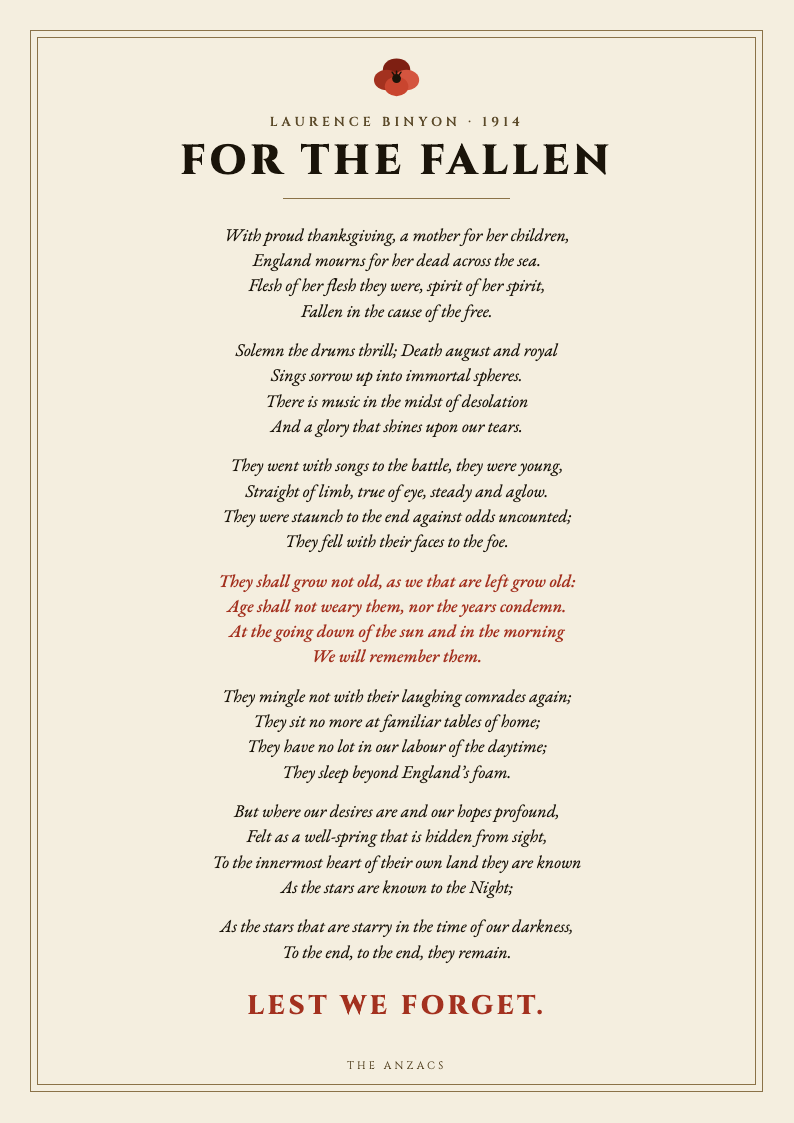
All seven verses of “For the Fallen”, with the Ode picked out in red.
The poem is in the public domain. These posters are free to print and share for personal and community use.
Every soldier sailed. These are the troopships that carried New Zealand’s men to the war, from photographs held in public collections. Type your soldier’s ship into the form above and his ship’s photograph appears.
Photographs from Wikimedia Commons, mostly the State Library of Queensland (public domain). Each credit is under its photograph.