Most decorated · 28 medals and honours, 6 for gallantry

Major Arthur Coningham

Arthur Coningham was born in Brisbane but grew up in Wellington, enlisted in the New Zealand Expeditionary Force in August 1914 and served in the Samoa occupation and at Gallipoli. Invalided out with typhoid, he paid his own way to England, became a fighter pilot and won the Military Cross and Distinguished Service Order within two weeks of each other's gazetting in September 1917, then the Distinguished Flying Cross in June 1919 for his work commanding 92 Squadron. That makes three confirmed gallantry awards for the First World War; the two Croix de Guerre sometimes listed for him could not be tied to that war and belong to 1944-45.

28medals and honours
6of them for gallantry

His medals and honours

Won for gallantry

GRI
Gallantry award

Military Cross

20 July 1917 (recommended 22 July 1917 after that day's fighting) · Ypres Salient, near Comines and Wervicq, Belgium/France border · Second Lieutenant (temporary Captain), Royal Flying Corps, Special Reserve, No. 32 Squadron RFC (DH.2 scouts)

Gazetted: London Gazette supplement 30287, published 17 September 1917, p. 9566

On 20 July 1917, in the build-up to the Third Battle of Ypres, 32 Squadron flew twelve patrols and about fifty enemy aircraft were seen. Coningham, then a flight commander, had a remarkable morning. First he and Lieutenant Wells dived on a two-seater and sent it falling through cloud over Zandvoorde. At about 10.15 am he came across four Albatros fighters attacking an RE.8 reconnaissance machine, put a long burst into one and saw it spin away out of control. Later, heading home, he spotted a yellow Albatros far below, dived out of the sun, opened fire at close range and watched its left top wing fold back. The machine fell from about 2,500 feet and crashed near Wervicq. The brigade commander, Brigadier General Charles Longcroft, recommended an immediate Military Cross two days later, adding that on four other occasions Coningham had sent down aircraft that probably crashed and had driven off many more. The gazetted wording praises his dash and offensive spirit in closing with the enemy and driving machines down out of control. A press report at the time tied the MC and DSO together to ten enemy aircraft in sixty engagements over fifteen flying days in July, but Orange's reading of the squadron records puts his personal tally with 32 Squadron nearer seven destroyed, with three shared.

Online Cenotaph and the RAF biography (rafweb) both give 17 September 1917 for the MC, matching the Gazette supplement date. The Gazette site indexes this supplement under 14 September 1917, the date of the Gazette it supplements.

Counted in his gallantry totalSource: London Gazette supplement 30287, p. 9566 (thegazette.co.uk/London/issue/30287/supplement/9566); Edinburgh Gazette 13143, 19 Sept 1917, p. 1978; Orange, ch. 2
Gallantry award

Distinguished Service Order

27 and 30 July 1917 (recommended 2 August, approved 10 August 1917) · Polygon Wood, Zonnebeke and Langemarck, Ypres Salient · Second Lieutenant (temporary Captain), Royal Flying Corps, Special Reserve, No. 32 Squadron RFC

Gazetted: London Gazette supplement 30308, 26 September 1917, p. 9968 (award); citation published in supplement 30466, 9 January 1918, p. 561

The DSO rests on a run of fighting that ended in the fight that nearly killed him. On 27 July 1917 he led two pairs of scouts, held off the escort and attacked a German two-seater north of Polygon Wood with one partner; he hit the observer with his first burst and together they drove it down smoking until it crashed near Zonnebeke. That evening he destroyed another machine east of Houthulst Wood. On Monday 30 July, bad weather limited the squadron to a single patrol. About 7 pm Coningham, Wells and Albert Gordon of Auckland met five Albatros fighters near Langemarck. Coningham closed on one and saw his shots strike, but was hit himself, suffered two head wounds and lost consciousness. He came round to find another Albatros on him, got onto its tail and sent it spinning down. Gordon was wounded and crashed; Wells hid in cloud. Though losing a great deal of blood, Coningham stayed with Wells for another half hour until he was sure the enemy had been driven off, then was invalided to England. The gazetted citation describes an attack on a machine protected by ten others, a second kill that evening and the later fight in which he was wounded and rendered unconscious, and calls his bearing a splendid example of pluck and determination. General Gough asked after him by name. In late August he went to Buckingham Palace, where the King invested him with both the DSO and MC.

Orange says the DSO was announced on 26 September; the supplement is dated by the Gazette as of 25 September and carries the date line 26 September 1917. The citation was held back until 9 January 1918. A report of Coningham being mentioned four times in French Army orders in a fortnight (Orange) is not an award he was gazetted for and is not counted.

Counted in his gallantry totalSource: London Gazette supplement 30308 p. 9968 (thegazette.co.uk/London/issue/30308/supplement/9968); London Gazette supplement 30466 p. 561; Orange, ch. 2
RAF
Gallantry award

Distinguished Flying Cross

Service with No. 92 Squadron, July-November 1918 · Western Front, France (listed under 'France') · Captain (acting Major), Royal Air Force, No. 92 Squadron RAF (SE.5a fighters)

Gazetted: London Gazette supplement 31378, 3 June 1919 (King's Birthday honours for the RAF), p. 7031; repeated in Edinburgh Gazette supplement 13458, 5 June 1919, p. 2047

Coningham took command of the newly formed 92 Squadron on 26 March 1918 and led it to France in July, flying with 80 Wing and later 22 Wing. The squadron flew patrols, then increasingly low-level bombing and strafing of German aerodromes, transport and troops as the Allied advance gathered pace. On 11 August he led twelve SE.5as against the German airfield at Nesle as fourteen Fokkers were taking off, and came home with his aircraft shot about. On 16 and 17 August he took part in the big combined raids on Haubourdin and Lomme airfields near Lille, and on 5 September he shot down a Fokker D.VII that had been attacking a formation of Camels near Cambrai. In the last weeks of the war the squadron was credited with 37 enemy aircraft destroyed and 16 driven down out of control, and he flew on his own more than most commanders. The Gazette entry carries no citation, since birthday-list DFCs did not. Orange describes the award, which came after the Armistice, as a tribute to his courage and leadership under fire; he also notes that Coningham lamented that other 92 Squadron pilots received too little recognition.

The earlier candidate note called the DFC date unverified. It is now settled from the Gazette: the DFC was gazetted on 3 June 1919, not in 1918. Wikipedia and rafweb say only that he left the war with the DSO and MC, which is true of what was awarded before the Armistice; the DFC came afterwards. No citation was published, so the 'story' describes his 92 Squadron service rather than a single act.

Counted in his gallantry totalSource: London Gazette supplement 31378, 3 June 1919, p. 7031 (thegazette.co.uk/London/issue/31378/supplement/7031); Edinburgh Gazette supplement 13458, 5 June 1919, p. 2047; Orange, ch. 3 (pp. 24-34)
AFC
Gallantry award

Air Force Cross

Flight of 27 October - 19 November 1925; award dated 1 January 1926 · Cairo (Helwan) to Kano, Nigeria, and back · Squadron Leader, No. 47 Squadron detachment, Egypt Group RAF (three DH.9As)

Gazetted: London Gazette supplement 33119, 1 January 1926, p. 10 (Air Ministry, 1 January 1926)

In October 1925 Coningham, then on the staff of Egypt Group, led three DH.9A aircraft of 47 Squadron from Helwan near Cairo to Kano in northern Nigeria, flying by Wadi Halfa, Khartoum, El Fasher and Fort Lamy and on to Kano, and then back again by the same route. They covered about 6,500 miles in twenty-four days, with eighty hours actually in the air over sixteen flying days, across bush and desert that no aircraft had crossed before; all three engines ran faultlessly. The Air Ministry called it the first east-west crossing of Africa by air and the first appearance of aircraft in Nigeria, though it was officially presented only as a training exercise on an extended scale. Coningham was worn out with malaria and flying stress when he got back. The Gazette notice gives no citation; Orange quotes the award as being for consistent and meritorious service and devotion to duty in command of the flight. A sergeant on the flight, Henry Grant, received the Air Force Medal.

The AFC is a flying (non-combat) gallantry-type award. It is counted in the whole-career gallantry total with that caveat; WW1 gallantry stays at three. Online Cenotaph lists it without a date.

Counted in his gallantry totalSource: London Gazette supplement 33119, 1 January 1926, p. 10 (thegazette.co.uk/London/issue/33119); Orange, Coningham (1990), pp. 42-46 (page range as cited by Wikipedia)
1914
Foreign gallantry award

Croix de Guerre (France)

1944 per Orange; Online Cenotaph labels it '1914-1918' · France · Air Marshal, 2nd Tactical Air Force

Gazetted: Not located (see Legion of Honour entry)

French gallantry-type award, listed by Orange as the Croix de Guerre conferred together with the Legion of Honour in 1944. Online Cenotaph and Wikipedia describe it as the 1914-1918 version, and rafweb leaves the date as '191?', but nothing found ties a French Croix de Guerre to the First World War: the only French link for 1917 is Orange's remark that Coningham was mentioned four times in French Army orders in a fortnight, which is not an award. The previous WW1 file did not count this item for that reason. It is counted here once, as a single French Croix de Guerre, whichever war it belongs to, and is never counted twice.

Era unresolved: WW1 per Online Cenotaph label and rafweb's '191?' placeholder, WW2 (1944) per Orange. One item either way.

Counted in his gallantry totalSource: Orange, Coningham (1990); Online Cenotaph; rafweb; Wikipedia infobox
1914
Foreign gallantry award

Croix de Guerre with Palm (Belgium)

Gazetted 23 November 1945; invested 8 November 1946 · Belgium · Air Marshal, 2nd Tactical Air Force

Gazetted: London Gazette third supplement 37362, 23 November 1945, p. 5703

Belgian Croix de Guerre with Palm, conferred together with the Order of Leopold for his services in the war and gazetted in the same entry. The Palm denotes citation in the Belgian army's orders of the day. His command, the 2nd Tactical Air Force, flew from Belgian airfields from September 1944 and gave close air support to the British and Canadian armies advancing through Belgium and into Holland and Germany. It was invested by the Prince Regent at the Royal Palace in Brussels on 8 November 1946. The previous WW1 file correctly treated this as a Second World War award; it is now counted in the whole-career gallantry total and the medal total.

WW2 award, not WW1.

Counted in his gallantry totalSource: London Gazette supplement 37362, 23 November 1945, p. 5703; Orange, Coningham (1990)

Every other medal and honour (23)

1914–15
1914-15 Star1915 · GallipoliListed by Online Cenotaph. He landed at Anzac Cove in June 1915 with C Squadron, Canterbury Mounted Rifles, which is the service that would qualify him; his health gave way within months.
GEORGIVS V BRITT OMN REX ET IND IMP
British War Medal 1914-201914-1918Standard campaign medal for his overseas service in the Samoan occupation, Egypt/Gallipoli and later on the Western Front.
Victory Medal1914-1918Allied Victory Medal for his service in a theatre of war, including the Gallipoli campaign and the air war over the Western Front.
GENERAL SERVICEGR
General Service Medal 1918-62 (Kurdistan clasp)1923 · Northern Iraq (Kurdistan)Campaign medal for service in the air operations against Kurdish insurgents in 1923, when 55 Squadron's DH.9As worked from Mosul; the clasp is not counted separately.
GEORGIVS V SILVER JUBILEE 1935GR
King George V Silver Jubilee Medal 19351935Commemorative medal for the Silver Jubilee of King George V; issued in small numbers to serving officers and others.
CORONATION OF GEORGE VI 1937GR
Coronation Medal 19371937Commemorative medal for the coronation of King George VI, issued in limited numbers to serving officers.
CB
Companion of the Order of the Bath (CB)Services 1 October 1940 - 31 March 1941; gazetted 24 September 1941 · Bomber Command, United KingdomConingham took over 4 Group, the RAF's night-bomber group of Whitley squadrons around York, on 3 July 1939 and commanded it for the first two years of the war, through the leaflet raids of the Phoney War, the…
KCB
Knight Commander of the Order of the Bath (KCB)Gazetted 27 November 1942 (services in the Middle East campaign) · Western Desert and LibyaThe KCB came just after the victory at El Alamein. Coningham had taken over 204 Group in the Western Desert in July 1941, it became Air Headquarters Western Desert in October 1941, and over the next year he turned it…
Legion of Merit (Chief Commander), United States1943-44 (date conflict: rafweb 27 August 1943; Orange 27 July, in a 1944 passage) · Mediterranean / North-West EuropeAn American award of the Legion of Merit in the highest degree, Chief Commander, which was the grade given to senior Allied commanders. Coningham commanded the Northwest African Tactical Air Force in the Tunisian,…
Legion of Honour (France)1944 per Orange (rafweb leaves the date as '191?') · FranceFrench recognition of his work in the Allied air effort. Orange puts it in June 1944, saying the London Gazette on 23 June announced that Coningham had been made an Officer of the Legion of Honour with the Croix de…
FOR DISTINGUISHED SERVICEGR
Distinguished Service Medal (United States Army)26 July 1945 (presented; rafweb lists 3 August 1945) · Frankfurt, GermanyOn 26 July 1945, during President Truman's visit to Eisenhower's headquarters in Frankfurt after the Potsdam Conference, Truman presented the Army Distinguished Service Medal to Coningham and his old friend Air…
Order of Leopold, Grand Officer (Belgium)Gazetted 23 November 1945; invested 8 November 1946 · Brussels, BelgiumThe Gazette lists Air Marshal Sir Arthur Coningham among officers granted permission to wear Belgian decorations conferred for valuable services in the war: the Order of Leopold in the Grand Officer grade, with the…Ribbon drawn from the best description we found
KBE
Knight Commander of the Order of the British Empire (KBE)1 January 1946 (New Year Honours; invested March 1946) · United KingdomIn the New Year Honours of 1946 Coningham, together with his colleague Air Vice-Marshal Elmhirst, was made a Knight Commander of the Order of the British Empire, the Gazette listing him as Air Marshal Sir Arthur…
Grand Cross of the Order of the Phoenix (Greece)6 September 1946 (rafweb); presented September 1946 · London (Claridge's Hotel)A Greek order, listed by Online Cenotaph, Wikipedia and the RAF biography among his foreign honours. No citation or Gazette notice was found, so the reason for the award is not documented in the sources read; the…Ribbon drawn from the best description we found
Order of Orange-Nassau, Knight Grand Cross (Netherlands)Gazetted 18 November 1947 (rafweb: 18 November 1947) · NetherlandsThe Gazette of 18 November 1947 lists Air Marshal Sir Arthur Coningham, KCB, KBE, DSO, MC, DFC, AFC, RAF (retired), among those given permission to wear awards conferred by the Queen of the Netherlands in recognition…Ribbon drawn from the best description we found
1939-43
1939-45 Star1939-1945 · Bomber Command, Western Desert, Mediterranean, North-West EuropeCampaign star for operational service in the Second World War; his command of 4 Group in 1939-41 and of the Desert, Northwest African and 2nd Tactical Air Forces would qualify him.
AFRICA
Africa Star1941-1943 · Western Desert, Libya, TunisiaCampaign star for service in North Africa, which his command of the Western Desert Air Force and the Northwest African Tactical Air Force clearly qualifies him for.
ITALY
Italy Star1943-1944 · Sicily and ItalyCampaign star for service in Sicily and Italy; he directed the tactical air force for the invasions of Sicily and Italy until he left for England in January 1944.
AIR CREW
Air Crew Europe Star (France and Germany clasp)1944-1945 · North-West EuropeAs listed by Online Cenotaph: a Europe campaign star with the France and Germany clasp, for his command of the 2nd Tactical Air Force in the North-West Europe campaign from the Normandy landings to the end of the war.
THE DEFENCE MEDALGR
Defence Medal1939-1945 · United KingdomHome-service medal normally given for three years' service in the United Kingdom (or six months overseas in non-operational areas) during the war.
THE WAR MEDAL 1939-1945GR
War Medal 1939-1945 (with oak leaf)1939-1945The standard British medal for full-time service in the Second World War. The oak leaf shown on its ribbon is the emblem for a mention in despatches, which is why Online Cenotaph lists it 'with oak leaf'.
NEW ZEALAND WAR SERVICENZ
New Zealand War Service Medal1939-1945Not counted. Online Cenotaph lists it, but the medal was issued to members of New Zealand's armed forces, reserve and Home Guard, and the merchant navy; Coningham served in the RAF throughout the Second World War.
Mentioned in Despatches11 December 1917, Operations 15 February - 19 June 1923, New Year 1941 (service in 1940), 11 June 1942 (King's Birthday · Western FrontRecorded in the RAF biography as a mention in Sir Douglas Haig's despatch of late 1917. Not a gallantry award and not counted. Brought to notice for distinguished service in the Kurdistan operations of 1923 in Air…

His story

  1. Born in Brisbane, raised in Wellington

    Arthur Coningham was born in Brisbane on 19 January 1895, the first child of a former Test cricketer of the same name. His parents moved the family to New Zealand after financial and legal troubles in Australia; by about 1906 they were in Wellington. He won a Junior Free Place at Wellington College in 1909 and became a champion shot in the school team, which was New Zealand secondary schools champion in 1910. He left school in late 1911 and worked as a farmhand at a sheep station at Lake Rotoiti and then on North Island farms.

    Source: Orange, chs. 1-2; Auckland Museum Online Cenotaph
  2. Enlisted and sailed for Samoa

    Working on a farm near Dannevirke when war broke out, he hurried home and enlisted on 10 August 1914 in the 5th (Wellington) Regiment as part of the Samoan Advance Party. The force sailed on 15 August and took Apia on 29 August, the first German colony to fall to British forces in the war. He served about seven months in Samoa before returning to Wellington in April 1915.

    Source: Orange, ch. 2; Online Cenotaph (embarkation 14-28 Aug 1914, HMNZT 2)
  3. Gallipoli with the Canterbury Mounted Rifles

    Re-enlisting in the 4th Reinforcements, he sailed on 17 April 1915 as a trooper in C Squadron, Canterbury Mounted Rifles, reaching Suez at the end of May and Anzac Cove in early June. Sunstroke, dysentery and typhoid put him in a series of hospitals; he was sent home in September, reached New Zealand on 26 October 1915 and was discharged as medically unfit with effect from 1 April 1916.

    Source: Orange, ch. 2; Online Cenotaph (HMNZT 23 Waitomo)
  4. To England, and into the air

    Despite his discharge, he sailed to England at his own expense in April 1916 and entered a Royal Flying Corps school at Reading. He was commissioned on probation on 8 August 1916, learned to fly at Upavon and Netheravon and joined 32 Squadron, flying DH.2 pusher scouts, on 19 December 1916.

    Source: Orange, ch. 2; rafweb
  5. 32 Squadron over Arras and Ypres

    He flew his first offensive patrol on 5 January 1917 and became a flight commander in May. He picked up the nickname 'Mary', a play on 'Maori', from his New Zealand background. His July fighting brought the MC and DSO, and on 30 July he was wounded in the head and invalided home.

    Source: Orange, ch. 2; Wikipedia
  6. MC and DSO gazetted

    The MC was gazetted on 17 September and the DSO on 26 September 1917. At the end of August he had already been invested with both at Buckingham Palace.

    Source: London Gazette supplements 30287 and 30308
  7. Commanding 92 Squadron

    Promoted to major, he formed and commanded 92 Squadron at Tangmere from 26 March 1918, took it to France in July and led it through the last months of the war in SE.5a fighters, increasingly on ground-attack work. His friend James Robb was his senior flight commander. His last patrol of the war was on 10 November 1918.

    Source: Orange, ch. 3
  8. Distinguished Flying Cross

    After a course at Halton, he reverted to captain on 1 May 1919. The DFC followed in the King's Birthday honours gazetted on 3 June 1919, and in July he accepted a permanent commission as a flight lieutenant.

    Source: London Gazette supplement 31378, p. 7031; Orange, ch. 3
  9. Peace, the next war and loss

    He won the Air Force Cross for leading the first west-to-east air crossing of Africa in 1925-26. In the Second World War he rose to command the Western Desert Air Force and the Second Tactical Air Force, pioneering close air support. He disappeared on 30 January 1948 on the Star Tiger flight to Bermuda.

    Source: Orange; Wikipedia

Rank and insignia

The ranks he held, and the badge a soldier of that rank wore. These are simplified illustrations.

New Zealand Expeditionary Force 1914 to 1918 badge
PrivateAugust 1914 · 5th (Wellington) Regiment, NZEFNo rank badge: a private soldier wore none
New Zealand Expeditionary Force 1914 to 1918 badge
TrooperApril 1915 · Canterbury Mounted Rifles, NZEFNo rank badge: a private soldier wore none
Second Lieutenant8 August 1916 · on probation), Royal Flying Corps, Special ReserveShoulder strap: one pip
New Zealand Expeditionary Force 1914 to 1918 badge
Temporary CaptainMay 1917 · flight commander), 32 SquadronRank badge not drawn for this entry
Major26 March 1918 · commanding 92 Squadron (acting rankShoulder strap: crown
Captain1 May 1919 · revertedShoulder strap: three pips

His ships

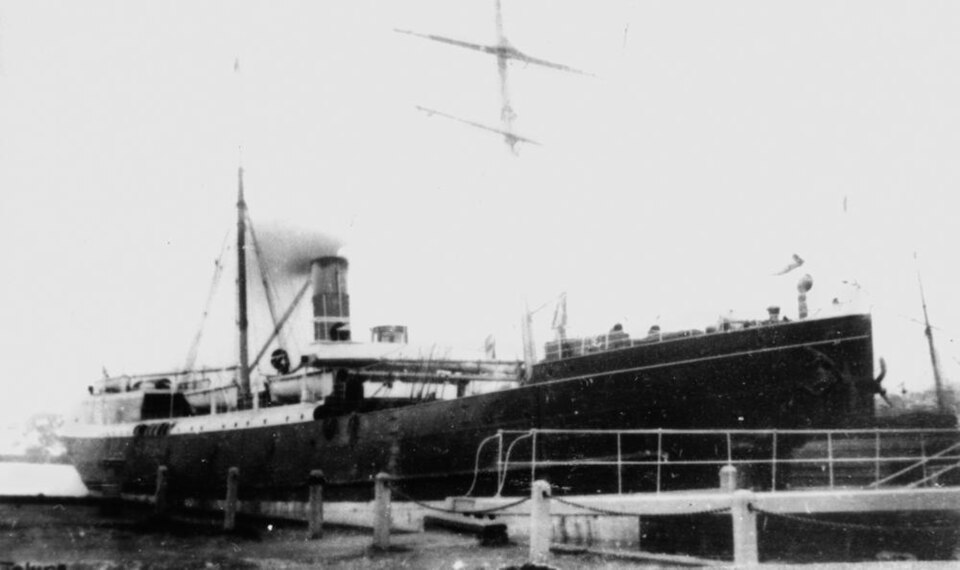
HMNZT Monowai
HMNZT MonowaiTransport to SamoaSailed 15 August 1914 with the Samoan expedition (Orange). Online Cenotaph records the embarkation as HMNZT 2.StateLibQld 1 143087 Monowai (ship) · Public domain · Wikimedia Commons
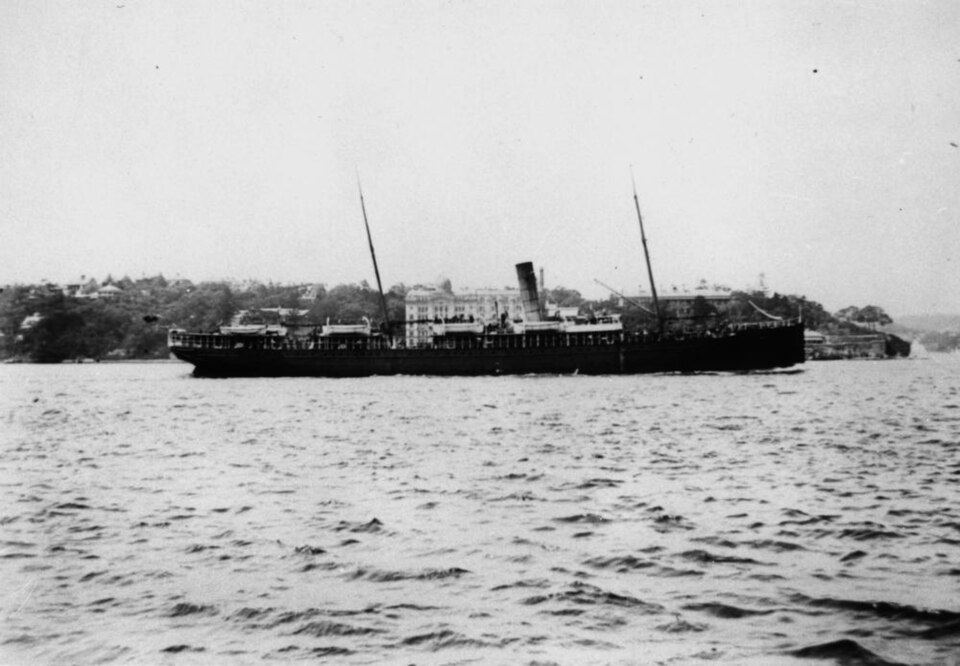
HMNZT Talune
HMNZT TaluneTransport back to WellingtonLeft Samoa 3 April 1915, reaching Wellington about 14 April.StateLibQld 1 167979 Talune (ship) · Public domain · Wikimedia Commons
HMNZT WaitomoTransport to EgyptSailed 17 April 1915 with the 4th Reinforcements (HMNZT 23), per Online Cenotaph.

Afterwards

Coningham stayed in the RAF, serving in Iraq (commanding 55 Squadron) and Egypt, and received the Air Force Cross for leading three DH.9As from Cairo to Kano in Nigeria and back in 1925. In the Second World War he commanded 4 Group of Bomber Command, then from 1941 the Western Desert Air Force, where he developed the doctrine of close cooperation between aircraft and ground forces, and later the Second Tactical Air Force in north-west Europe. He was knighted (KCB in 1942, KBE in 1945) and appeared on the cover of Time magazine in August 1944.

He died with the passengers and crew of the British South American Airways Avro Tudor IV Star Tiger, which vanished between the Azores and Bermuda on 30 January 1948. No wreckage was found, so he has no grave. His New Zealand connection is well attested: Online Cenotaph, Wikipedia, the Air Force Museum of New Zealand and his biographer all describe him as Australian-born and New Zealand-raised. The NZEF service numbers are from Online Cenotaph.

Later awards, not counted here: Knight Commander of the Bath (KCB, 1942) and Knight Commander of the British Empire (KBE, 1945); Croix de Guerre with Palm and Order of Leopold (Grand Officer), Belgium: gazetted 23 November 1945 as conferred for services in the war (London Gazette supplement 37362, p. 5703); Officer of the Legion of Honour with French Croix de Guerre: announced 23 June 1944 (per Orange); Gazette entry not located; Legion of Merit (Chief Commander) and Distinguished Service Medal (USA), Order of the Phoenix (Greece), Order of Orange-Nassau (Netherlands); Air Force Cross (1926, peacetime long-distance flight, not a WW1 or WW2 combat award).

His sign

This is the Service Record sign as we would make it from his record: his rank, name, regiment, number and date of embarkation. The medals on the sign are worked out automatically, so the medals listed above are the ones to rely on.

The Service Record for Arthur Coningham
The Service Record

Photograph

We haven’t hosted a photograph here

Rather than copy someone else’s image onto our own site, we’d rather send you to see it where it’s properly held: his full record at the Auckland War Memorial Museum’s Online Cenotaph.

Sources

What we could not confirm

GALLANTRY COUNT SETTLED AT 3 (MC, DSO, DFC), not the 5 in the earlier candidate list. All three are confirmed in the London Gazette.

DFC: confirmed in London Gazette supplement 31378 of 3 June 1919, p. 7031 (Edinburgh Gazette 5 June 1919, p. 2047), listed as 'Capt. (A./Maj.) Arthur Coningham, D.S.O., M.C.' under France. No citation was published. The candidate note's '1918' DFC date was wrong; it is June 1919.

French Croix de Guerre: NOT confirmed for WW1. Online Cenotaph lists 'Croix de Guerre 1914-1918 (France)', but no London Gazette entry, Orange passage or other source places a French Croix de Guerre in 1914-18. Orange says only that he was 'mentioned in French Army orders four times in a fortnight' in 1917, which is not a gazetted award, and that on 23 June 1944 he became an Officer of the Legion of Honour with Croix de Guerre (WW2). Treat as unverified for WW1 and do not count.

Belgian Croix de Guerre with Palm: this is a WW2 award, confirmed by London Gazette supplement 37362 (23 November 1945, p. 5703), conferred with the Order of Leopold for services in the war; Orange says it was invested on 8 November 1946 in Brussels. Online Cenotaph lists it among his medals but it is not a WW1 award, so it is excluded from the count.

Mentions in despatches: Wikipedia says four, rafweb gives one (11 December 1917), Online Cenotaph lists one without a date. Only one is shown here, not counted, and not verified in the Gazette.

Birth date: Orange and Wikipedia give 19 January 1895 (Brisbane); rafweb gives 11 March 1895. Online Cenotaph notes both. 19 January is used.

NZ connection: born in Brisbane (confirmed), raised in Wellington (family there by about 1906, when he was 11) and educated at Wellington College (confirmed), NZEF service in Samoa and at Gallipoli with the Canterbury Mounted Rifles (confirmed by Orange and Online Cenotaph). Wikipedia's mention of 'Somaliland' is an error; Orange has Egypt and Gallipoli. However, he was discharged from the NZEF in April 1916 and all his gallantry awards were won in British service (RFC/RAF), so ranking him with 'New Zealanders' depends on the inclusion rule.

Posting date to 32 Squadron: Orange and Wikipedia say 19 December 1916; rafweb lists 8 December 1916 as his pilot posting.

Victory totals vary by source: nine (Haigh and Polaschek), 14 (Aerodrome.com), 19 (rafweb); Orange's reading of the squadron records puts his 32 Squadron personal tally at about seven destroyed plus three shared. Not used as a headline figure.

Online Cenotaph also lists a 'New Zealand War Service Medal' under his medals; this is not counted (not a WW1 medal as far as could be established).

totalMedalsCount of 7 = MC, DSO, DFC, 1914-15 Star, British War Medal, Victory Medal, and one MiD. The medals themselves were not checked against a medal roll.

WHOLE-CAREER TOTAL = 28 by the counting rule: 7 already in coningham.json (MC, DSO, DFC, 1914-15 Star, BWM, Victory Medal, MiD emblem) plus 21 new items. CONFIRMED beyond Online Cenotaph (Gazette, Orange, rafweb or Wikipedia): the 7 WW1 items and 12 new ones (AFC, CB, KCB, KBE, Legion of Honour, French Croix de Guerre, Legion of Merit, US DSM, Order of Leopold, Belgian Croix de Guerre, Phoenix, Orange-Nassau) = 19. The remaining 9 (GSM Kurdistan, Jubilee 1935, Coronation 1937, 1939-45 Star, Africa Star, Italy Star, Air Crew Europe Star, Defence Medal, War Medal 1939-45) rest on Online Cenotaph alone and are entitlement-plausible but unverified. If only confirmed items are wanted the total is 19.

HOW THE 27 CENOTAPH ENTRIES RECONCILE: 27 entries; minus the New Zealand War Service Medal (not eligible: RAF service, not NZ forces) = 26. Duplicates and double listings inside those 26: 'Croix de Guerre 1914-1918 (France)' is the single French Croix de Guerre (era uncertain, one item); 'Grand Cordon de l'Ordre de Leopold' is the Order of Leopold Grand Officer per the Gazette (one item); 'War Medal 1939-1945 with oak leaf' plus 'Mentioned in Despatches' share one MiD emblem (counted once). Cenotaph omissions added: CB (1941) and Order of Orange-Nassau (1947). 26 + 2 = 28.

MENTIONS IN DESPATCHES: four in total, all confirmed in the Gazette: 11 Dec 1917 (supplement 30421, p. 12923), 11 Jun 1924 (32945, p. 4664, Kurdistan 1923), 1 Jan 1941 (35029, p. 33), 11 Jun 1942 (35586, p. 2516). Wikipedia's 'four' is therefore right. Counted as ONE item under the rule. Pure emblem count could argue for one per war (oak leaf on the Victory Medal and the War Medal), which would raise the total by 1.

CB AND KCB: counted as two items (two separate appointments, 1941 and 1942) as well as the KBE (1946). If a single Order of the Bath is counted once, the total drops to 27 (18 confirmed).

GALLANTRY COUNT: WW1 = 3 (MC, DSO, DFC), from coningham.json. Whole career = 6: those three plus the AFC (flying award, non-combat) and the French and Belgian Croix de Guerre. Strictly British combat gallantry stays at 3. The US Legion of Merit and DSM are service/merit awards and are not counted as gallantry.

FRENCH AWARDS: Orange says the Legion of Honour (as Officer) and the Croix de Guerre were announced in the London Gazette on 23 June 1944; I searched the Gazette issues numbered 36545-36600 (June 1944) and found no entry for him, so that is unverified. rafweb dates the French pair '191?', Online Cenotaph labels the Croix de Guerre '1914-1918', Wikipedia lists a Knight of the Legion of Honour. Only one Legion of Honour and one French Croix de Guerre are counted either way; the grade and the war are unresolved.

LEGION OF MERIT DATE: rafweb 27 Aug 1943; Orange (1944 passage) 27 July. Unresolved; the grade (Chief Commander) is not in doubt.

US DSM: presented by Truman at Frankfurt on 26 July 1945 (Orange; NARA photograph); rafweb gives 3 Aug 1945 as the date. Not found in the Gazette.

ORDER OF ORANGE-NASSAU: not on the Online Cenotaph list. The Gazette of 18 Nov 1947 shows it as Knight Grand Cross (the same list also has a 'with swords' sub-grade; swords are a distinction, not a separate item). It was gazetted 11 days after he retired and 10 weeks before he vanished.

NOT COUNTED: Freedom of the City of Brussels (April 1946, Orange) and the renaming of a Brussels avenue after him; honorary city freedom is not a medal, order or decoration. The refused '8' for the Eighth Army ribbon is a clasp request, not an item. Orange also notes he was never made GCB or Air Chief Marshal. The 1914 Samoa service produced no separate medal.

Wikipedia's infobox says 'Order of Leopold II' where the Gazette says Order of Leopold; the Gazette is followed.

WW1 SERVICE (CONFIRMED): Coningham served in the NZEF in 1914-16: enlisted 10 Aug 1914 in the 5th (Wellington) Regiment for the Samoa expedition, then a trooper in the Canterbury Mounted Rifles at Gallipoli in 1915 (Online Cenotaph embarkations HMNZT 2 and HMNZT 23, service numbers 1/456 and 7/1177; Orange; rafweb). Discharged medically unfit 1 April 1916, then paid his own way to England and joined the RFC.

AGAINST LISTING HIM AS A NEW ZEALANDER OF THAT WAR: he was born in Brisbane (some sources say 11 March 1895), left the NZEF in April 1916, won every WW1 gallantry award in British service (RFC/RAF, with a Special Reserve commission), served in the RAF for the rest of his career, and was a British knight. The NZ case rests on his Wellington upbringing, Wellington College, his NZEF service in 1914-16 and the 'Mary' nickname. Wikipedia's 'Somaliland' is an error (Orange: Egypt and Gallipoli).
Concept, design and execution by Unlimited Potential