First Contingent 1899 · New Zealand Hill, DSO · Commander Canterbury Battalion, Gallipoli 1915
Colonel John Gethin Hughes
John Gethin Hughes, a Napier law clerk and volunteer officer, gave up his captain's commission to go to the Boer War as an ordinary trooper on the Waiwera. He was commissioned in the field and, at Slingersfontein on 15 January 1900, won the first Distinguished Service Order awarded to a New Zealander.
He stayed in the army, sailed with the Main Body in 1914, and commanded the Canterbury Battalion at Gallipoli from June 1915 until illness ended his service there. He retired as an honorary colonel in 1917 and died in Wellington in 1954, aged 88.
His story
From Bluff to Napier
Hughes was born on 13 March 1866 at Bluff (then Campbelltown), the son of a mariner, John Gethin Hughes, and Mary Agnes McLean, and went to school at Akaroa and Timaru. He worked as a law clerk in Timaru and served in C Battery there from 1884 to 1887. He moved to Napier in 1888, worked as a bookkeeper and then for the solicitor H. A. Cornford, played rugby for Hawke's Bay, and commanded F Battery in 1891-97. In 1898 he became adjutant and captain of the 3rd (East Coast) Battalion, Wellington Rifle Volunteers.
Source: Online Cenotaph C35872 (citing the Dictionary of New Zealand Biography); Wikipedia 'John Gethin Hughes'; Knowledge Bank 'John Gethin Hughes (1866-1954)'A captain who chose to go as a trooper
Napier gave the East Coast Battalion's adjutant a rousing farewell on 16 October 1899. He had said he would rather be a trooper fighting for his country than the richest landholder in Hawke's Bay, and he went as a private. The Bush Advocate reported that the Napier man, called a lance corporal, wired the Telegraph: 'Goodbye, good people of Napier.' He sailed on the Waiwera on 21 October with 2 Company as number 148, aged about 33.
Source: Papers Past, Daily Telegraph (Napier) 17 Oct 1899 'Farewell to Captain Hughes'; Bush Advocate 24 Oct 1899; Online Cenotaph C35872Commissioned in the field; New Zealand Hill
Hughes was commissioned lieutenant in December 1899, the first New Zealander commissioned in the field; a Napier paper noted in February 1900 that 'Sergeant Hughes, of Napier' had filled the vacancy left when Lieutenant Neave went to the Yorkshire Regiment. On 15 January 1900 he distinguished himself in a counter-attack at Slingersfontein against Boers trying to seize a hill that came to be called New Zealand Hill. For this he became the first New Zealand serviceman appointed to the Distinguished Service Order (London Gazette, 10 April 1901).
Source: Online Cenotaph C35872 (DNZB quotations); Papers Past, Daily Telegraph (Napier) 22 Feb 1900; Wikipedia 'John Gethin Hughes'Mentioned in despatches; home
Described as one of the contingent's outstanding officers, Hughes was mentioned in despatches before the First Contingent went home in January 1901. In June 1901 the Otago Witness named him, as Captain J. G. Hughes DSO, with Major Madocks as the 'two heroes of New Zealand Hill'.
Source: Online Cenotaph C35872; Papers Past, Otago Witness 26 Jun 1901 'Presentation of War Medals'Career soldier
Back in New Zealand he was commissioned captain in the NZ Militia (1901) and served as a staff officer to the commandant. In 1902 he went briefly to South Africa again with the 10th Contingent. He believed he had been treated unfairly by Richard Seddon, and was not promoted major until January 1907. He trained with the British Army in England and joined the New Zealand Staff Corps in 1910. On 8 May 1909 he married Marion (Maisie) De Vere O'Connor in Wellington; they had two sons and a daughter.
Source: Online Cenotaph C35872 (DNZB quotations); Wikipedia 'John Gethin Hughes'With Godley's headquarters
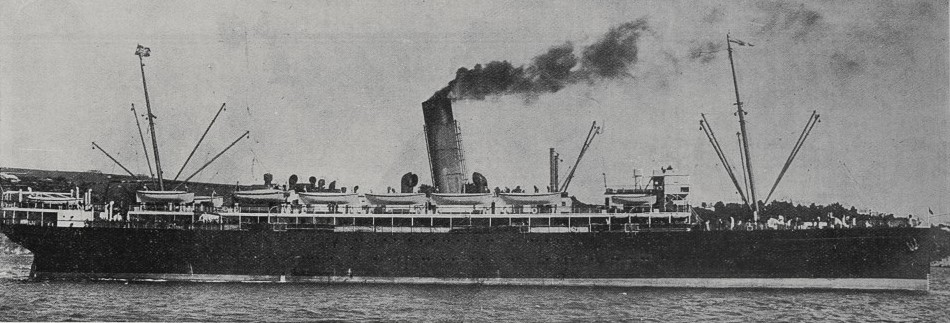
Hughes enlisted in the NZEF on 5 August 1914 and became Assistant Military Secretary to Major General Sir Alexander Godley. He embarked at Wellington on the Maunganui (HMNZT 3) with the Main Body headquarters on 16 October 1914 and became NZEF camp commandant in Egypt early in 1915.
Source: Online Cenotaph C35872; Wikipedia 'John Gethin Hughes'Commanding the Canterbury Battalion at Gallipoli
Hughes landed at Anzac on 25 April 1915 with Godley's headquarters. On 7 June he took over the Canterbury Battalion when its commander was wounded and was promoted lieutenant colonel on 24 September. On 7 August the battalion took heavy casualties when, as the DNZB records, he unwittingly chose to reform his men in ground covered by a newly placed Turkish battery. His health failed in October 1915 and he went to hospital with paratyphoid, iritis and dysentery.
Source: Online Cenotaph C35872 (citing DNZB); Wikipedia 'John Gethin Hughes'Invalided home
After convalescing in England, Hughes was invalided back to New Zealand in July 1916. He was made a Companion of St Michael and St George (CMG) for Gallipoli and was mentioned in despatches (London Gazette, 28 January 1916). He held the rank of colonel from 31 December 1916 and in 1917 went on the retired list as an honorary colonel.
Source: Online Cenotaph C35872Veterans' man
He was asked to stand for Parliament in Wellington North and was long active in the First New Zealand Mounted Rifles Association. In 1919 he wrote to the widow of a comrade to thank her for a copy of her late husband's war diary (Auckland Museum Library, MS 2005/4). He died at home in Wellington on 23 July 1954, aged 88, survived by his wife and children; the Evening Post printed an obituary on 27 July 1954.
Source: Online Cenotaph C35872; Wikipedia 'John Gethin Hughes'
Rank and insignia
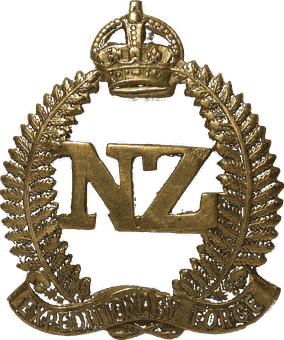
The rank he held, and the badge a soldier of that rank wore. These are simplified illustrations.
His medals
“Documented” means a source we name says he received it. “Listed on the Online Cenotaph” means the museum’s record lists the medal but we could not confirm it elsewhere. “Entitled” means his service dates qualified him, but we have not seen a record of the medal itself. The drawings are simplified illustrations.
His ships
Afterwards
Hughes remained a prominent figure among veterans of the First Contingent, and held the honorary rank of colonel. He lived in Wellington and died there at home on 23 July 1954, survived by his wife Marion and their children. His burial place is not recorded in the sources we could reach.
His sign
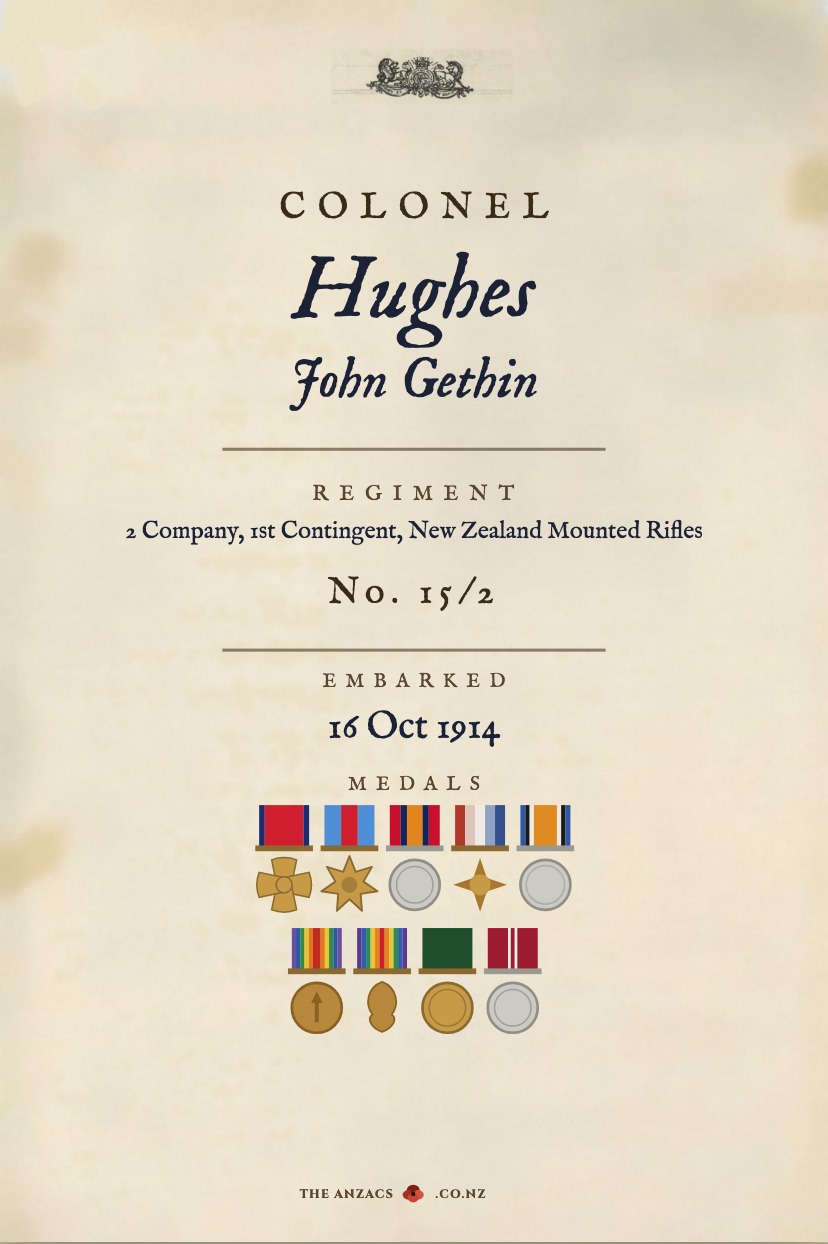
This is the Service Record sign as we would make it from his record: his rank, name, regiment, number and date of embarkation. The medals on the sign are worked out automatically from the embarkation date, so the medals listed above are the ones to rely on.
Photograph
We haven’t hosted a photograph here
Rather than copy someone else’s image onto our own site, we’d rather send you to see it where it’s properly held: his full record at the Auckland War Memorial Museum’s Online Cenotaph.
Sources
- John Gethin Hughes, Online Cenotaph, Auckland War Memorial Museum.
- Wikipedia: John Gethin Hughes
- Knowledge Bank: John Gethin Hughes (1866-1954)
- Papers Past: Farewell to Captain Hughes, Daily Telegraph (Napier) 17 Oct 1899
- Papers Past: Departure of the Contingent, Bush Advocate 24 Oct 1899
- Papers Past: New Zealander Killed, Daily Telegraph (Napier) 22 Feb 1900
- Papers Past: Presentation of War Medals, Otago Witness 26 Jun 1901
- Dictionary of New Zealand Biography: Hughes, John Gethin (cited via Online Cenotaph; page itself blocked)
What we could not confirm
Rank at embarkation: Cenotaph says Private; the Bush Advocate (Oct 1899) calls him lance corporal and the Napier paper (Feb 1900) a sergeant. He had resigned a captaincy to go.
Birth: DNZB says 13 March; Haigh and Polaschek give 12 March. Wikipedia and Knowledge Bank say born at Bluff. Cenotaph gives no place.
Family: the Cenotaph shows him as married at embarkation in 1899 with next of kin Margaret Ann Hughes at Dannevirke, yet his marriage to Marion De Vere O'Connor is dated 8 May 1909 (DNZB). We have not worked out the relationship of Margaret Ann Hughes (possibly his mother, given his father's name) or whether there was an earlier marriage.
Promotion to lieutenant colonel: Cenotaph says 24 September 1915; Wikipedia implies he commanded as lieutenant colonel from June 1915. We follow the Cenotaph. Wikipedia also says he was promoted major in Natal in 1902; DNZB (via Cenotaph) says January 1907. We follow DNZB.
Cenotaph gives 16 Oct to 3 Dec 1914 for the Maunganui embarkation (departure from Wellington and, probably, arrival in Egypt); only the first date is used.
Return ships (1901 and 1916), the date of his 10th Contingent voyage, grave location and any burial place were not found. The DNZB and NZ History pages were blocked; DNZB content is taken from quotations on the Cenotaph and from Wikipedia.
Wikipedia says he led the battalion at Chunuk Bair; the Cenotaph (quoting DNZB) places the heavy losses on 7 August. We have kept to the Cenotaph wording.