Most decorated · 22 medals and honours, 4 for gallantry

Major Keith Park

Keith Park was a Thames-born, Dunedin-raised Union Steam Ship Company purser who went to Gallipoli as a New Zealand howitzer gunner, was commissioned in the field, and then moved to the British Army and the Royal Flying Corps. Flying Bristol Fighters with No. 48 Squadron in 1917-18 he won the Military Cross and a Bar, the Distinguished Flying Cross and a French Croix de Guerre, four gallantry awards in all, and is credited with 20 victories. He is better known today as the commander of No. 11 Group in the Battle of Britain.

22medals and honours
4of them for gallantry

His medals and honours

Won for gallantry

GRI
Gallantry award

Military Cross

17 August 1917 (inferred; the citation is undated) · Over the Belgian coast, from about 15,000 ft over Slijpe (Slype) down to about 3,000 ft near Ghistelles · Second Lieutenant (RFA and RFC), No. 48 Squadron, Royal Flying Corps (pilot of a Bristol F.2 Fighter)

Gazetted: Announced London Gazette supplement 30308, 26 September 1917, p. 9978; citation published London Gazette supplement 30466, 9 January 1918, p. 634

On the morning of 17 August 1917 Park and his observer, Second Lieutenant Arthur Noss, were part of a three-machine Bristol Fighter patrol from Frontier aerodrome near Dunkirk when several German formations came at them. The other two Bristols were put out of action, which left Park and Noss alone against Albatros scouts. They stayed and fought rather than run for home. The combat began at about 15,000 feet over Slijpe and ran down to roughly 3,000 feet near Ghistelles. By the end of it Noss, firing the Lewis gun from the back seat, and Park, flying the aircraft, had seen one Albatros crash into the sea and had driven three more down out of control. His brigade commander, Brigadier-General John Becke, recommended both men for the MC. The citation also says he had performed several other fine feats and had set an inspiring example by his dash and tenacity. Park had joined the squadron only six weeks earlier, on 7 July, after more than 100 hours of instructing in England, and this was one of his first big fights at the front. The medal was announced in the Gazette of 26 September 1917, and the full citation appeared in January 1918.

The citation gives no date. The link to the 17 August fight comes from Wikipedia (citing Orange's biography and Shores et al.) and from the match between the citation's tally (one destroyed, three out of control) and The Aerodrome's victory list for that morning (one destroyed, three out of control). Treat the date as an inference. The Gazette name line is mis-OCR'd as 'E.F.A.' in one scan but reads R.F.A. and R.F.C. in the Edinburgh Gazette.

Counted in his gallantry totalSource: London Gazette 30308 p.9978 and 30466 p.634 (read from thegazette.co.uk PDFs); Edinburgh Gazette 13146 p.2058; Wikipedia; The Aerodrome victory list
GRI
Bar: a second award

Bar to Military Cross

21 August to 14 September 1917 (inferred from the tally in the citation) · Flanders coast and the Dixmude area (Slijpe, Westende, Ostend, Middelkerke, Dixmude) · Second Lieutenant, promoted temporary Captain on 11 September 1917, No. 48 Squadron, Royal Flying Corps

Gazetted: Announced London Gazette supplement 30355, 27 October 1917, p. 11108; citation published London Gazette supplement 30583, 18 March 1918, p. 3418

The Bar did not honour a single fight. Its citation is a score card: nine enemy aircraft accounted for, three of them completely destroyed and six driven down out of control. Matching it against the squadron's victory record, the nine are the claims Park made from 21 August to 14 September 1917, flying with several different observers: Noss, Second Lieutenant W. O'Toole, Second Lieutenant Alan Light, Air Mechanic H. Lindfield and Second Lieutenant Hugh Owen. The best-known was on 5 September, when Park and Lindfield shot down a pilot of Jasta Boelcke, Franz Pernet, off Ostend. Pernet was the stepson of General Erich Ludendorff, one of Germany's leading generals. On 14 September he had a double over Dixmude, one Albatros sent down in flames and another out of control. He was promoted temporary Captain on 11 September and was the squadron's top scorer for August and September. Becke recommended him for the Distinguished Service Order. Major-General Hugh Trenchard, commanding the RFC in France, cut this to a Bar to the MC, judging that sufficient reward. The Bar was first announced in the Gazette of 27 October 1917, with the citation following in March 1918.

The DSO recommendation and its downgrade are from Orange's biography as summarised on Wikipedia; not independently checked. The identification of the nine victories as those of 21 August to 14 September is my own reconciliation of the citation with The Aerodrome's list (3 destroyed and 6 out of control come out exactly); it is not stated in the Gazette. The Aerodrome shows some victories as 'destroyed in flames' where Wikipedia says 'destroyed'.

Counted in his gallantry totalSource: London Gazette 30355 p.11108 and 30583 p.3418 (read from thegazette.co.uk PDFs); Wikipedia; The Aerodrome
1914
Foreign gallantry award

Croix de Guerre (France), with bronze palm

Awarded November 1917 for work in support of the French 1st Army in Flanders · Flanders, Belgium · Second Lieutenant / temporary Captain, No. 48 Squadron, Royal Flying Corps

Gazetted: No London Gazette entry found; no French Journal Officiel reference located

No. 48 Squadron was working from the Dunkirk area in the Flanders sector in 1917. Park's biographer Vincent Orange, as summarised on Wikipedia, says Park was given the Croix de Guerre in November 1917 for his services in support of the French 1st Army's operations in the Flanders sector. No citation text, order date or individual action has been found in any source we could reach, so what he did to earn it cannot be described beyond that. The medal itself survives in the Auckland Museum collection (1975.40.18). The museum describes it as a bronze Croix de Guerre with the 1914-1917 reverse and a small bronze palm on the ribbon, annotated 'Army Despatch'. A palm on this decoration marks a citation at army level in the French order of the day, which fits an award from a French army such as the 1st.

PALM QUESTION. Online Cenotaph and the Auckland Museum catalogue (the physical medal in Park's own group) say with palm. Wikipedia's article and infobox, Te Ara (DNZB) and The Aerodrome give a plain 'Croix de guerre'. The museum catalogue is the only source that describes the object itself, and the Cenotaph agrees, so 'with bronze palm' is the better-supported reading, but no French or Gazette document confirms it. The 1914-1917 on the reverse is the standard design date, not the date of award. Counted as one foreign gallantry award either way.

Counted in his gallantry totalSource: Auckland Museum collection 1975.40.18 (public API object 658536); Online Cenotaph C18405; Wikipedia; Te Ara DNZB; The Aerodrome
RAF
Gallantry award

Distinguished Flying Cross

Wartime service, 1917-1918 (no specific act cited) · France (as listed in the Gazette) · Captain (acting Major), Royal Air Force, No. 48 Squadron (R.F.A. on the Gazette line)

Gazetted: London Gazette supplement 31378 (thirteenth supplement to the Gazette of 30 May 1919), 3 June 1919, p. 7032

The DFC was one of the Royal Air Force honours announced on 3 June 1919, 'in recognition of distinguished services rendered during the war'. There is no individual citation, so there is no single deed to describe. Park is listed as Captain (acting Major) Keith Rodney Park, M.C., with 'France' as his theatre. What lies behind it is his whole record with 48 Squadron: 20 victories in the squadron's tally (9 destroyed, 11 out of control; the Air Ministry credited him with 14, and Orange accepted 11 destroyed and at least 13 damaged), and the command of the squadron from April 1918. That spring, during the German offensive, the squadron kept retreating to new airfields and at one point was down to three serviceable aircraft. It flew low-level attacks in a Bristol Fighter that was poorly suited to the work. In August 1918 Park was wounded during a bombing raid on Bertangles airfield but still helped injured men escape from burning hangars. He crashed a Bristol on a test flight on 9 November, exhausted, two days before the Armistice.

The Gazette gives no individual act. The campaign narrative above is context from Wikipedia/Orange, not the grounds stated for the award. The museum's DFC reverse is dated 1918, which is the medal's standard design date. Wikipedia and Online Cenotaph agree on the 1919 Gazette.

Counted in his gallantry totalSource: London Gazette 31378 pp.7030-7032 (read from thegazette.co.uk PDFs); Edinburgh Gazette 13458 p.2048; Wikipedia; Te Ara DNZB

Every other medal and honour (18)

1914–15
1914-15 Star1915 · Gallipoli (from 25 April 1915)Awarded for service in a theatre of war before the end of 1915. Park qualified at Anzac Cove, where his howitzer battery landed on the day of the landing, and at Helles with the 29th Division until the evacuation.
GEORGIVS V BRITT OMN REX ET IND IMP
British War Medal 1914-20The general campaign medal for the 1914-1918 war, issued for service in a theatre of war. Park's example is held by Auckland Museum and is named to Major K. R. Park, RAF.
Victory Medal 1914-19The Allied victory medal issued to those who served in a theatre of war. Park's is held by Auckland Museum, named to Major K. R. Park, RAF, and catalogued with the oak leaf emblem for a mention in despatches.
CB
Companion of the Order of the Bath (CB), Military DivisionAppointment dated 10 December 1940; announced 17 December 1940 · Fighter Command, south-east England (No. 11 Group)Park was made a Companion of the Bath only days after he had been taken off command of No. 11 Group, the fighter group covering London and the south-east. The Gazette gives the reason only as 'distinguished services…
KBE
Knight Commander of the Order of the British Empire (KBE), Military DivisionAnnounced 27 November 1942 · Malta and the Middle EastPark was knighted for his part in the Middle East campaign. The Gazette wording is 'distinguished services in the campaign in the Middle East', with no individual citation. He had taken over the RAF on besieged Malta…
KCB
Knight Commander of the Order of the Bath (KCB), Military Division1 January 1945 (New Year Honours); insignia received from King George VI at Buckingham Palace on 14 February 1945 · Middle East Command, CairoThe KCB was a New Year Honour that lifted Park within the Order of the Bath, which he had entered as a Companion in 1940. The Gazette lists him as Air Marshal Sir Keith Rodney Park, K.B.E., C.B., M.C., D.F.C., with…
GCB
Knight Grand Cross of the Order of the Bath (GCB), Military DivisionGazetted 23 May 1946; insignia received from King George VI at Buckingham Palace on 16 October 1946 · South-East Asia Command (Kandy, then Singapore)The Grand Cross is the top class of the Order of the Bath and reached Park only about sixteen months after his KCB. The Gazette gives it as 'in recognition of distinguished services in South East Asia' and names him…
Legion of Merit, Degree of Commander (United States)Awarded 1945 (Auckland Museum); permission to wear gazetted June 1947 · South-East Asia CommandThe Legion of Merit is an American decoration given by the President of the United States for exceptional meritorious service. In 1947 the London Gazette recorded the King's unrestricted permission for Air Chief…
1939-43
1939-1945 Star, with Battle of Britain claspQualifying period 3 Sep 1939 to 2 Sep 1945Star for operational service in the Second World War; the Battle of Britain clasp (not counted separately) reflects his command of No. 11 Group in 1940.
AFRICA
Africa Star, with North Africa 1942-43 claspQualifying period 10 Jun 1940 to 12 May 1943Star for service in the North African campaign; he commanded the RAF in Egypt and then Malta in support of it. The clasp is not counted separately.
BURMA
Burma StarQualifying period 11 Dec 1941 to 2 Sep 1945Star for the Burma and South-East Asia campaign; he was Allied Air Commander, South-East Asia in 1945.
ITALY
Italy StarQualifying period 11 Jun 1943 to 8 May 1945Star for the Sicily and Italy campaigns; his Malta-based squadrons supported the invasion of Sicily from July 1943.
THE DEFENCE MEDALGR
Defence MedalQualifying period 3 Sep 1939 to 2 Sep 1945Medal for approved service in the defence of the United Kingdom, including his Fighter Command appointments in 1938-40.
THE WAR MEDAL 1939-1945GR
War Medal 1939-1945Qualifying period 3 Sep 1939 to 2 Sep 1945General service medal for at least 28 days' full-time service during the Second World War.
GEORGIVS V SILVER JUBILEE 1935GR
King George V Silver Jubilee Medal 1935Commemorates 6 May 1935 (issue date not found)Commemorative medal for the twenty-fifth anniversary of King George V's accession (6 May 1910 to 6 May 1935), held by Auckland Museum.
CORONATION OF GEORGE VI 1937GR
King George VI Coronation Medal 1937Commemorates 12 May 1937 (issue date not found)Commemorative medal for the coronation of King George VI and Queen Elizabeth on 12 May 1937, held by Auckland Museum.
DUNKERQUE 1940D
Dunkirk Medal (French veterans' commemorative medal, 1940)Commemorates the Dunkirk evacuation, 29 May to 3 June 1940 (grant date not found) · DunkirkFrench commemorative medal for those who took part in the Dunkirk evacuation, which Park's No. 11 Group covered from the air. Held by Auckland Museum with the ribbon missing.
Mentioned in DespatchesBetween 4 August 1914 and 10 August 1920His Victory Medal in the Auckland Museum collection is catalogued as 'with MID oak leaf emblem', and the museum notes that only one emblem is worn however many times a man was mentioned. That shows he was mentioned…

His story

  1. Thames, Dunedin and the sea

    Born at Thames on 15 June 1892, the third son of the geologist James Park, and schooled at King's College in Auckland and then Otago Boys' High School in Dunedin. He joined the Union Steam Ship Company as a cadet purser in June 1911 and served in the Territorial field artillery from March 1911 to November 1913. His employers gave him leave to go to war in December 1914, and he enlisted in the NZEF on 14 December.

    Source: Te Ara DNZB; Wikipedia
  2. Away with the 3rd Reinforcements

    He sailed from Wellington on 14 February 1915 with the Third Reinforcements (Field Artillery) and was posted in Egypt to the 4th Howitzer Battery under Major Norrie Falla.

    Source: Online Cenotaph; Wikipedia
  3. Anzac Cove and Helles

    The 4th Howitzer Battery was the only howitzer unit at Anzac and short of ammunition. Park came ashore on the evening of 25 April or the next morning and ran messages when the guns were quiet. He was commissioned in July and took part in the August fighting. He then moved to the British Army (Gazetted temporary Second Lieutenant, Royal Field Artillery, dated 1 September 1915) and commanded a 12-pounder naval gun with No. 10 Battery, 147th Brigade, 29th Division at Helles. The battery was evacuated to Egypt in January 1916.

    Source: Wikipedia; Te Ara DNZB; London Gazette 29308 p.9514
  4. The Somme, and wounded

    The 29th Division went to the Western Front in March 1916 and into the Somme sector. On 21 October, trying to bring an unserviceable gun back for repair, Park was blown off his horse by a German shell, wounded and sent to England, where he was graded unfit for active service.

    Source: Wikipedia; Online Cenotaph (wounded 21 October 1916)
  5. Learning to fly

    The wound got him the Royal Flying Corps transfer he had long wanted. He trained at Reading and Netheravon, qualified with 20-odd hours solo, and instructed at Rendcomb, where he logged over 100 hours before being sent to France in June.

    Source: Wikipedia; Te Ara DNZB
  6. 48 Squadron and the Bristol Fighter

    Posted to No. 48 Squadron on 7 July and flying from Frontier aerodrome east of Dunkirk. His first fight was on 24 July. He and his observers claimed 16 victories by 14 September, including the dogfight of 17 August that brought the MC, and the tally behind the Bar. He was made temporary Captain on 11 September and flight commander.

    Source: Wikipedia; The Aerodrome; London Gazette
  7. French honour, then a forced landing

    Awarded the French Croix de Guerre in November for work with the 1st French Army in Flanders. On 3 January 1918, on a photo reconnaissance near Ramicourt, he and his observer Lieutenant J. Robertson were attacked by Albatros fighters. Their engine was hit and Park force-landed behind British lines. Online Cenotaph says he was shot down twice (once by anti-aircraft fire, once by a pilot of Schlachtstaffel 5).

    Source: Wikipedia; Online Cenotaph
  8. Commanding 48 Squadron

    He returned as a major to command 48 Squadron in the German spring offensive, by which time he was the only pilot left from its 1917 ranks. He fought it through the retreat to Bertangles, was wounded in an August bombing raid on the airfield, and crashed a Bristol on 9 November while exhausted. The Armistice came two days later. Squadron records credit him and his observers with 20 enemy aircraft (9 destroyed, 11 out of control).

    Source: Wikipedia; Te Ara DNZB
  9. The DFC and a permanent commission

    He married Dorothy Parish in London on 25 November 1918. In April 1919 he flew a Handley Page O/400 round the British Isles in 28 hours 30 minutes. His DFC was gazetted on 3 June 1919, and he received a permanent RAF commission from 1 August 1919, staying in the service until 1946.

    Source: Wikipedia; London Gazette 31378

Rank and insignia

The ranks he held, and the badge a soldier of that rank wore. These are simplified illustrations.

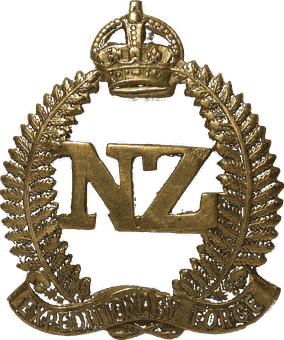
New Zealand Expeditionary Force 1914 to 1918 badge
GunnerDec 1914 to Feb 1915 · then Corporal (Cenotaph, Wikipedia) or Lance Bombardier (Te Ara), NZ Field ArtilleryNo rank badge: a private soldier wore none
Second LieutenantJuly 1915 · NZEF (commissioned in the fieldShoulder strap: one pip
Temporary Second Lieutenant1 September 1915 (Gazette 25 September 1915) · Royal Field ArtilleryShoulder strap: one pip
Lieutenantabout May 1916 · RFA (rank made substantiveShoulder strap: two pips
Second Lieutenant1917 · RFA and RFC (as in the Gazette, Sept 1917Shoulder strap: one pip
New Zealand Expeditionary Force 1914 to 1918 badge
Temporary Captain11 September 1917 · flight commander, 48 SquadronRank badge not drawn for this entry
MajorApril 1918 to 1919 · acting), commanding 48 SquadronShoulder strap: crown
Captain3 June 1919 · acting Major), RAF, in the DFC listShoulder strap: crown

His ships

HMNZT 17 Maunganui, HMNZT 18 Tahiti or HMNZT 19 AparimaTroopship from Wellington to Egypt (one of the three; which one is not known)Online Cenotaph gives his embarkation as 14 February 1915 with the 3rd Reinforcements, New Zealand Field Artillery, on one of these three transports. The UNSW NZEF database notes that the nominal roll does not say which ship an individual joined. Te Ara says he sailed in January 1915; the Cenotaph date of 14 February is preferred (the Wikipedia article says only 'the same month').

Afterwards

Park stayed in the Royal Air Force after the war, attended the first RAF Staff College course in 1922, commanded 111 Squadron in 1927-28 and served as air attache in South America (1934-36). In April 1940 he took command of No. 11 Group, which defended London and south-east England, and directed the fighter cover over Dunkirk and the Battle of Britain from his headquarters at Uxbridge. Lord Tedder later said that if any one man won the Battle of Britain, Park did. He was moved from No. 11 Group in December 1940 after a dispute over tactics with Air Vice Marshal Leigh-Mallory, and in July 1942 took charge of the RAF at Malta, turning its fighters from defence to offence. He later commanded RAF Middle East and then air forces in South-East Asia, and retired as an Air Chief Marshal in 1946.

Park returned to New Zealand in 1948, worked for Hawker Siddeley, chaired the committee that secured Auckland's Mangere airport site, and was an Auckland city councillor from 1962 to 1971. He died in Auckland on 6 February 1975, received a military funeral at Holy Trinity Cathedral, Parnell, and was cremated; his son had his ashes scattered over the Waitemata Harbour from an aircraft. A statue of him stands in Waterloo Place, London.

Later awards, not counted here: Companion of the Order of the Bath (CB), 1940; Knight Commander of the Order of the British Empire (KBE), 1942; Knight Commander of the Order of the Bath (KCB), 1945; Knight Grand Cross of the Order of the Bath (GCB), 1946; US Legion of Merit (Commander), 1945; 1939-45 Star with Battle of Britain clasp, Africa Star (North Africa 1942-43), Burma Star, Italy Star, Defence Medal, War Medal 1939-45; Not counted in the WW1 gallantry total..

His sign

This is the Service Record sign as we would make it from his record: his rank, name, regiment, number and date of embarkation. The medals on the sign are worked out automatically, so the medals listed above are the ones to rely on.

The Service Record for Keith Rodney Park
The Service Record

Photograph

We haven’t hosted a photograph here

Rather than copy someone else’s image onto our own site, we’d rather send you to see it where it’s properly held: his full record at the Auckland War Memorial Museum’s Online Cenotaph.

Sources

What we could not confirm

CROIX DE GUERRE PALM: Online Cenotaph and the Auckland Museum catalogue of the physical medal (1975.40.18, 'Croix de Guerre with bronze palme, Army Despatch') say with palm. Wikipedia, Te Ara DNZB and The Aerodrome say plain. No Gazette or Journal Officiel entry was found (London Gazette search for his name in 1917-19 returned no French-decorations list). Best-supported: with bronze palm; counted either way.

Croix de Guerre award date (November 1917) and reason (support of French 1st Army in Flanders) come only from Orange's biography via Wikipedia; not independently verified.

MC act date (17 August 1917) is an inference. MC and Bar first announced without citation in London Gazette 30308 (26 Sept 1917) and 30355 (27 Oct 1917); citations came later (9 Jan and 18 Mar 1918). The earlier candidates file quoted only the citation dates.

The Bar's nine victories (3 destroyed, 6 out of control) match The Aerodrome's list for 21 Aug-14 Sep 1917 exactly; this is my reconciliation, not stated by the Gazette.

DFC has no individual citation; the 3 June 1919 supplement is a RAF list 'in recognition of distinguished services rendered during the war'. The Edinburgh Gazette reprint is 5 June 1919.

Victory Medal in the museum is catalogued with an MiD oak leaf, so he was mentioned in despatches at least once; the Gazette reference was not found and Cenotaph does not list it. Not counted.

Early rank and sailing: Te Ara says lance bombardier, sailed January 1915; Cenotaph/Wikipedia say corporal, 14 February 1915; the Gazette of 25 Sept 1915 calls him 'Gunner' on transfer. The Cenotaph embarkation record cannot pin the ship to one of Maunganui, Tahiti or Aparima.

Cenotaph biography says he married in Buenos Aires in 1918 when air attache; Wikipedia, Te Ara and Orange say London, 25 November 1918 (he was not in Argentina until 1934). Cenotaph burial field cites Purewa Cemetery records; Wikipedia (Orange) says cremated with ashes scattered over the Waitemata Harbour.

Victory totals differ: 20 per squadron records and The Aerodrome; 14 per Air Ministry; Orange: 11 certainly destroyed, 13 more damaged.

gallantryCount 4 = MC, Bar to MC, DFC, Croix de Guerre. totalMedalsCount 8 = those four plus 1914-15 Star, British War Medal, Victory Medal and the mention-in-despatches emblem. WW2 honours (CB, KBE, KCB, GCB, Legion of Merit, WW2 stars) excluded.

TOTAL 22 = 8 (park.json) + 14 new: CB, KBE, KCB, GCB, Legion of Merit, 1939-45 Star, Africa Star, Burma Star, Italy Star, Defence Medal, War Medal 1939-45, Jubilee 1935, Coronation 1937, Dunkirk Medal.

ALTERNATIVE TOTALS. (a) Without the Dunkirk Medal (unofficial French commemorative): 21. (b) If the CB, KCB and GCB are treated as one Order of the Bath rather than three grades: 20 (19 without Dunkirk). 22 counts each grade, since each was a separate gazetted appointment with its own insignia and the Online Cenotaph lists them separately.

Not counted: the Battle of Britain clasp and the North Africa 1942-43 clasp (clasps). The Cenotaph's separate 'Legion of Merit (USA)' entry is a duplicate of 'Legion of Merit: Degree of Commander'. The Cenotaph's 'Military Cross and bar (MC*)' is already the MC and Bar in park.json.

WW2 MENTION IN DESPATCHES: none found. The only mention located is the WW1 oak leaf already counted in park.json. The Cenotaph lists none, and neither Wikipedia nor the museum records mention a WW2 one. It is unverified, so nothing is added.

LEGION OF MERIT DATES: the museum says awarded 1945 and gazetted 1947; Wikipedia says appointed 1947. The Gazette page itself (37998 p.2940) is headed 27 June 1947 while the museum and Wikipedia say 24 June 1947 (probably the supplement is to the Gazette of 24 June, printed 27 June). The Gazette entry is the King's permission to wear the decoration, not the date it was awarded.

GCB DATE: the supplement is dated Thursday 23 May 1946; one search snippet gave 22 May 1946, which the partly unreadable scan could not confirm. Use 23 May 1946 as the gazetted date.

CB DATE: scan reads 'loth December 1940' for the appointment date, taken as 10 December. The Gazette issue is 17 December 1940.

KCB INSIGNIA: the Gazette confirms the KCB (1 Jan 1945) and the Cenotaph lists it, but the Auckland Museum group (1975.40.1-19) has no KCB badge; accession 1975.40.7 is missing from the series. The 1914-15 Star in park.json is likewise not in the museum group, which may mean 1975.40.7 is that star.

CAMPAIGN MEDAL ISSUE DATES not found for any WW2 star or medal (the museum's 1945 date is a placeholder), so qualifying periods are given. I did not check whether Park's entitlement to four stars (1939-45, Africa, Burma, Italy) raised any limit on stars; the museum holds all four as issued to him and the Cenotaph lists them.

JUBILEE 1935 and CORONATION 1937: listed on the Cenotaph and held by the museum, but I found no Gazette entry or issue list and could not confirm the basis of eligibility. Counted on those two sources alone.

NOT FOUND: any other foreign order or decoration, a 1953 Coronation Medal, or other honour. Orange's biography is titled with 'DCL', an honorary degree (Doctor of Civil Law), which is not counted as a medal or honour. Te Ara DNZB could not be read (HTTP 403 and a bot check), so I could not check whether it adds anything.

WW1 SERVICE CONFIRMED: Online Cenotaph C18405 gives WWI service number 2/1254, NZ Field Artillery (3rd Reinforcements), embarked 14 February 1915; Auckland Museum holds his British War Medal and Victory Medal named to Major K.R. Park, RAF; and park.json documents Gallipoli, the RFA and No. 48 Squadron RFC. He was born in Thames in 1892 and enlisted in the NZEF. Points against listing him purely as a New Zealander of that war: from September 1915 he served in the British Army and then the RFC/RAF rather than the NZEF, he stayed in the RAF until 1946, and his Cenotaph record is tagged WWII as well as WWI. None of this prevents him being listed as a New Zealander who served in WW1.
Concept, design and execution by Unlimited Potential