First Contingent 1899 · Boer War · Army Service Corps 1917 · Prisons Department
Sergeant William James Parkes
William Parkes was a Palmerston North farrier and Manawatu Mounted Rifles volunteer who sailed as Trooper 17 with the First Contingent in October 1899. In an early skirmish in the Cape Colony his horse was shot under him and he was thrown, and comrades got him away under fire.
After the war he joined the Prisons Department, and in 1917 he went to the First World War as a sergeant in the 22nd Reinforcements, Army Service Corps. He died at Timaru on 13 September 1926, aged 48, while serving as gaoler there, and the pallbearers at his funeral were South African War veterans.
His story
A farrier from Palmerston North
Parkes was born in 1878 and was working as a farrier in Palmerston North when the war began. His death notice names his parents as W. and M. J. Parkes of Tolaga Bay and gives Wanganui as his birthplace; the Evening Post called him a native of Palmerston North. He was a member of the Manawatu Mounted Rifles (the Cenotaph says Palmerston North Rifles) and volunteered for the First Contingent.
Source: Online Cenotaph record C86097; Wanganui Chronicle, 17 Sep 1926 (death notice) and Evening Post, 14 Sep 1926 (Papers Past); New Zealand Herald, 16 Oct 1899 (list of Manawatu Mounted Rifles troopers)Sails on the Waiwera
Parkes left Wellington on the Waiwera on 21 October 1899 as Private 17, 1 Company, New Zealand Mounted Rifles.
Source: Online Cenotaph record C86097Horse shot under him at Jasfontein
In the skirmish at Jasfontein, in the Cape Colony, Parkes fell heavily when his horse was shot dead and was rescued under fire. A comrade's letter printed in the Evening Post of 27 January 1900 describes the scene: Parkes was found half stunned under the dying horse; he could not climb up behind one trooper but managed to get away with the sergeant. Later accounts name different rescuers: the Cenotaph (citing Stowers) names Sergeant Mahood and Trooper Hubbard with Lindsay's help; his 1926 newspaper obituary names Sergeant W. B. McLeod of the Waikato.
Source: Evening Post, 27 Jan 1900, 'Letters from the front' (Papers Past EP19000127.2.4); Online Cenotaph record C86097 (Stowers, p. 173); Evening Post, 14 Sep 1926Hospital and the rest of his war
In February 1900 Parkes was admitted to hospital with a bad bone injury from a horse kick. The Cenotaph records the Queen's South Africa Medal with all three state clasps (Cape Colony, Orange Free State, Transvaal), noting he was one of only five First Contingent men to receive them all. When he came home is not recorded in the sources seen.
Source: Online Cenotaph record C86097 (Stowers, p. 173)Prisons Department
On his return he joined the Prisons Department, was stationed in Wellington for some years, and eventually completed about 14 years in the service. By 1917 he was a warder and was living at 2 Hankey Street, Wellington, with his wife.
Source: Evening Post, 14 Sep 1926; Online Cenotaph record C86097; NZEF Project record 30691To the First World War
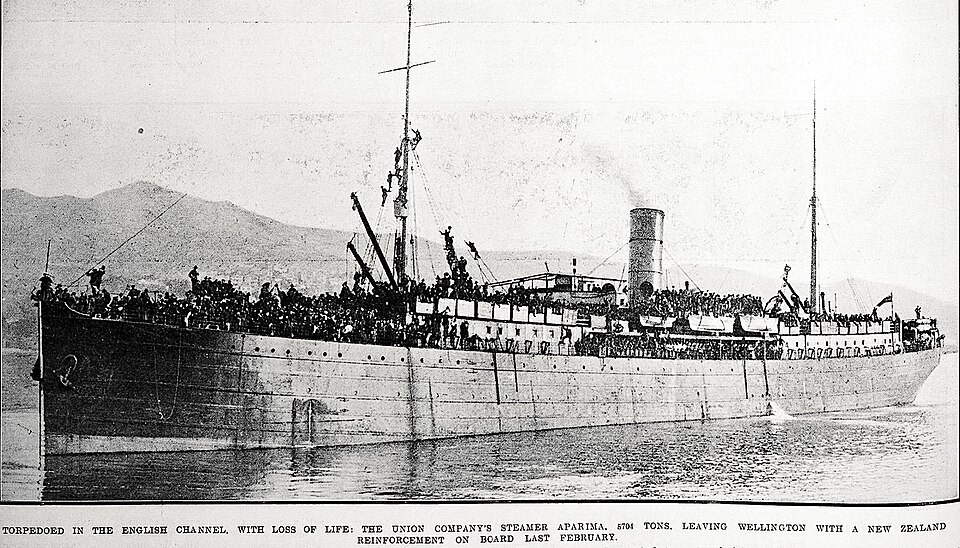
Aged about 38, Parkes enlisted as a sergeant in the 22nd Reinforcements, New Zealand Army Service Corps, number 30691. He embarked at Wellington on the Aparima (HMNZT 76) on 16 February 1917. Details of his service overseas and his return are not recorded in the sources found; his obituaries say only that he served in the Great War and in France.
Source: NZEF Project record 30691 (Nominal Roll Vol. 3, Roll 55, p. 24); Online Cenotaph record C86097; New Zealand Times, 15 Sep 1926Gaoler at Timaru and death
Parkes was promoted to gaoler and transferred to Timaru in about 1925. He died there on 13 September 1926, aged 48, leaving a widow and children. The funeral was held on Wednesday 15 September and he was buried at Timaru Cemetery; police attended and members of the South African Veterans' Association acted as pallbearers. The Rev. A. C. Lawry conducted the graveside service. The Timaru Herald called him a very efficient and popular officer.
Source: Timaru Herald, 17 and 18 Sep 1926; New Zealand Times and Wanganui Chronicle death notices, 15-17 Sep 1926; Online Cenotaph record C86097 (Timaru Cemetery, plot 221)Remembered by his family
In 1999 one of his descendants was invited to a commemoration in Wellington of the First Contingent's embarkation and was given a commemorative medal.
Source: Online Cenotaph record C86097 (information from family)
Rank and insignia
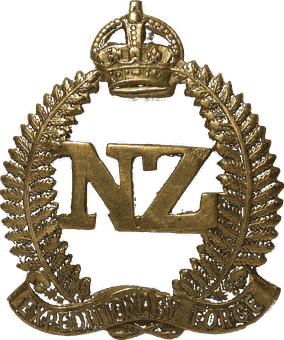
The rank he held, and the badge a soldier of that rank wore. These are simplified illustrations.
His medals
“Documented” means a source we name says he received it. “Listed on the Online Cenotaph” means the museum’s record lists the medal but we could not confirm it elsewhere. “Entitled” means his service dates qualified him, but we have not seen a record of the medal itself. The drawings are simplified illustrations.
His ships
Afterwards
Parkes spent his working life after the Boer War in the Prisons Department and had served about 14 years by the time of the First World War. He died at Timaru on 13 September 1926 while gaoler there, and is buried at Timaru Cemetery (plot 221). He was survived by his wife and children.
His sign
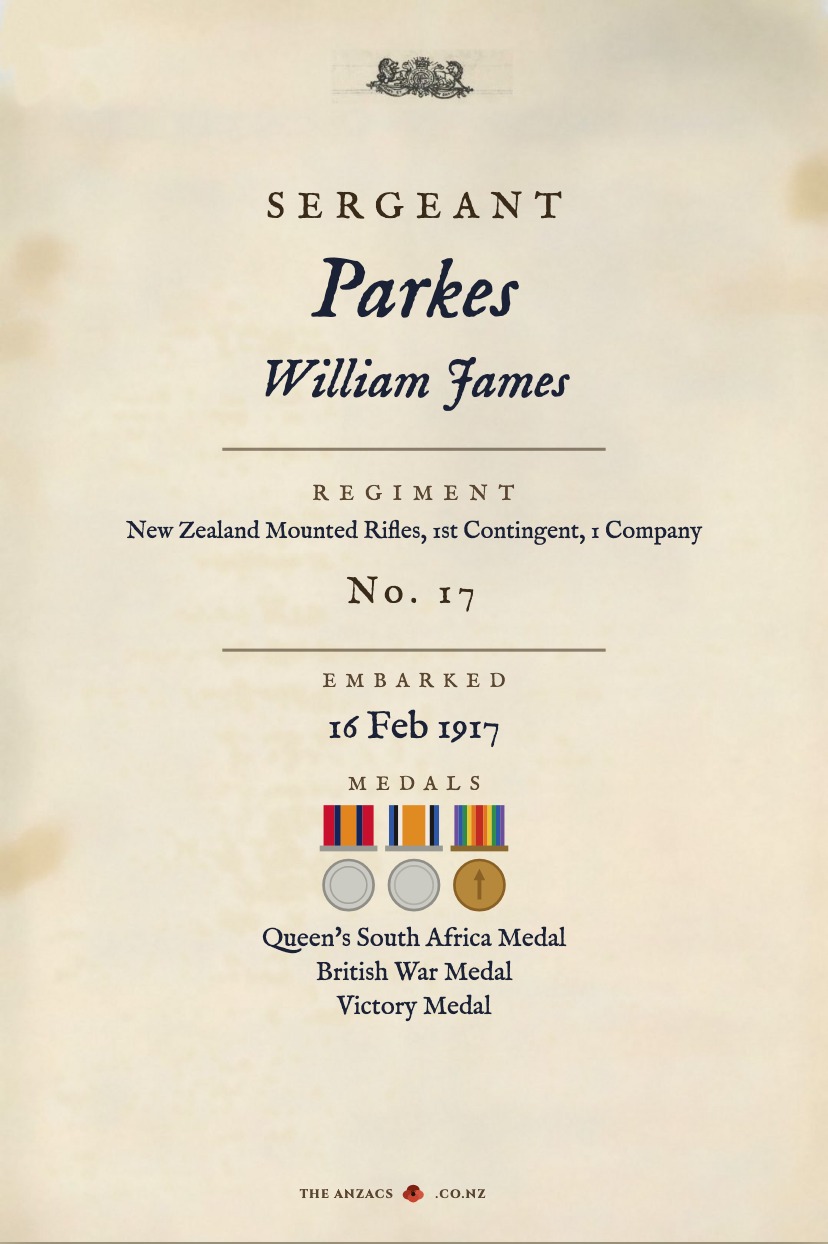
This is the Service Record sign as we would make it from his record: his rank, name, regiment, number and date of embarkation. The medals on the sign are worked out automatically from the embarkation date, so the medals listed above are the ones to rely on.
Photograph
We haven’t hosted a photograph here
Rather than copy someone else’s image onto our own site, we’d rather send you to see it where it’s properly held: his full record at the Auckland War Memorial Museum’s Online Cenotaph.
Sources
- William James Parkes, Online Cenotaph, Auckland War Memorial Museum.
- NZEF Project (UNSW), record for 30691 William James Parkes
- Evening Post, 14 Sep 1926, 'Personal Matters' (Papers Past)
- Timaru Herald, 17 Sep 1926, Obituary (Papers Past)
- Timaru Herald, 18 Sep 1926, 'Personal' (Papers Past)
- Wanganui Chronicle, 17 Sep 1926, death notice (Papers Past)
- Evening Post, 27 Jan 1900, 'Letters from the front' (Papers Past)
What we could not confirm
Birth date/place conflict: Cenotaph says 1 January 1878; the 1926 death notice says born at Wanganui on 24 April 1878 (age 48 fits 1878 either way). Evening Post calls him a native of Palmerston North.
Death date: death notices say 13 September 1926; the Cenotaph says 14 September.
Newspaper obituaries wrongly say he left with the 'Twelfth Contingent'; the First Contingent number 17 and the 21 October 1899 date are correct.
Rescuers at Jasfontein differ between the Cenotaph (Mahood, Hubbard, Lindsay) and the 1926 obituary (W. B. McLeod); the 1900 letter names Hubbard and a sergeant but not McLeod or Mahood.
Cenotaph says his post-war job was at Dunedin Gaol; the 1926 newspapers say he served in Wellington and then Timaru. Both may be true; Dunedin posting not confirmed.
The Cenotaph note about returning on the 'Harlech Castle' is attached to the name 'Pope', apparently pasted from another record, and is not used here.
Date he left South Africa and any WWI overseas service details, return voyage and discharge were not found; his Archives NZ files (R20522602 and R21384033) were not viewed.
First Contingent unit: Cenotaph says Palmerston North Rifles; Papers Past lists him with the Manawatu Mounted Rifles in October 1899.
Cenotaph says he was 'incorrectly described as a farmer in Stowers'; occupation used here is farrier.