Most decorated · 8 medals and honours, 4 for gallantry
Lieutenant-Colonel Hugh Stewart
Hugh Stewart was a Scottish-born classics professor at Canterbury College who left his lectures in August 1914 and ended the war commanding the 2nd Battalion, Canterbury Regiment. He won the Military Cross and French Croix de Guerre at Gallipoli, then the Distinguished Service Order and a bar to it on the Somme and at Messines, which makes four gallantry awards. He later wrote the standard history of the New Zealand Division in France.
8medals and honours
4of them for gallantry
His medals and honours
Won for gallantry
Gallantry award
Military Cross
Night of 4/5 June 1915 (probable; see note) · Quinn's Post, Gallipoli · Lieutenant at the time of the action; Captain when gazetted, 1st Company, Canterbury Infantry Battalion
Gazetted: London Gazette supplement 29438, dated 14 January 1916, p591 (Captain Hugh Stewart, Canterbury Battalion, New Zealand Force)
The gazette gives only a general reason (McDonald's book records it as distinguished service in the field at Gallipoli), so the detail comes from the battalion history and from Wikipedia, which says the recommendation was for Quinn's Post. On the night of 4 June 1915 the New Zealanders staged a small attack out of Quinn's Post, one of several diversions at Anzac meant to help a big British push at Cape Helles. Lieutenant Stewart commanded the whole sortie: two Canterbury parties of fifteen volunteers each, with Auckland men on their left and unarmed working parties behind. They left the trench at 11 p.m. under fire. One party ran over the Turkish front trench in the dark and surprised a group in the support trench behind. Stewart's own party found the front trench and bayoneted about a dozen Turks. He then went looking for the others, led an attack on enemy still firing from the front trench, and sent back 28 prisoners. Finding a tunnel linking the two trenches, he decided to hold both. By dawn the Turks had counter-attacked with bombs, the Auckland parties ran short of them, and the whole force had to pull back by 7 a.m. Stewart was among the wounded, hit by bomb splinters; Te Ara says he went back into the fight after a head wound, which he later called 'rather silly'.
The Canterbury Regiment history dates the sortie to the night of 4/5 June and says Stewart was wounded in it; the Online Cenotaph dates his wounding to 6 June 1915. The gazette citation itself does not name the action, so the link between the MC and this sortie rests on Wikipedia (which cites no citation text) and is probable rather than proven.
Counted in his gallantry totalSource: London Gazette 29438 p591 (read); McDonald, Honours and Awards to the NZEF; Ferguson, Official History of the Canterbury Regiment, ch. III (NZETC); Wikipedia; Te Ara DNZB
Gazetted: London Gazette supplement 29486, dated 24 February 1916, p2068 (Captain (temporary Major) Hugh Stewart, Canterbury Battalion)
This was a French honour given to British Empire officers and men for the Gallipoli campaign. The gazette notice says only that the President of the French Republic had bestowed the Croix de Guerre in recognition of distinguished service during the campaign, and no individual deed is named. For Stewart that campaign meant the April landing period, the Quinn's Post sortie in June, and the August fighting, when he briefly commanded the Otago Battalion as a major (according to the Canterbury history). He was also with the last Canterbury party to leave Anzac in the December 1915 evacuation, as a major leading the 'C' party of about forty picked men who held the line and kept up the show of normal activity until the last moment. His name appears in the same list as another Canterbury-area New Zealander, Captain J. M. Rose of the NZ Staff Corps.
No individual citation exists. The Online Cenotaph dates the award 31 May 1917, which is not the gazette date and looks like a local record date. The evacuation role is from the battalion history and is context, not stated as the reason for the award.
Counted in his gallantry totalSource: London Gazette 29486 p2068-2069 (read); McDonald; Ferguson, Official History of the Canterbury Regiment, ch. V (NZETC)
Gallantry award
Distinguished Service Order
20 to 21 September and 1 October 1916 · Goose Alley, Drop Alley and Gird Trench, near Flers, the Somme · Lieutenant-Colonel, 2nd Battalion, Canterbury Regiment
Gazetted: London Gazette supplement 30111, dated 4 June 1917, p5476 (King's Birthday Honours)
On the evening of 20 September 1916 Stewart sent three companies of his battalion against Goose Alley, a German trench north-west of Flers. At 8.30 p.m. they crept forward without any supporting barrage, got within fifty yards before being seen, then rushed the trench through machine-gun fire, taking twenty prisoners and four machine-guns. At 10 p.m. the Germans counter-attacked down every trench leading into the position, outthrowing the New Zealanders with a lighter egg-shaped grenade, and nearly cut the battalion off. Captain Francis Starnes rallied the mixed-up companies, cleared the trenches and by 4 a.m. had secured Drop Alley; a second German attack on the evening of the 21st was beaten off with the bayonet. The battalion counted some 300 enemy dead around Goose Alley, though it lost heavily itself: of 18 officers and 523 other ranks who went in, eight officers and 32 other ranks were killed and many more wounded or missing. On 1 October Stewart again commanded the battalion in the attack on Gird Trench and Circus Trench, where it took fifty prisoners and four machine-guns. The citation credits him with planning and carrying out the Goose Alley attack, and with his skill in handling the battalion on 1 October. The Fourth Army, III Corps and XV Corps commanders all sent congratulations, and the XV Corps commander singled out Stewart for the soundness of his plan.
Online Cenotaph records the award as 15 June 1917, a few days after the gazette date of 4 June 1917 shown here. The DSO was gazetted three days before Messines, so it is for the 1916 Somme actions, not for Messines.
Counted in his gallantry totalSource: London Gazette 30111 p5476 (read); McDonald (citation); Ferguson, Official History of the Canterbury Regiment, ch. VII (NZETC); Wikipedia
Gazetted: London Gazette supplement 30450, dated 1 January 1918, p17
Stewart spent the first half of 1917 preparing the 2nd Battalion for the Battle of Messines, and on 7 June it was given the far end of the brigade's advance, the village of Messines itself. His battalion followed the creeping barrage into the village, rushing two machine-guns on the way and then clearing dugouts. It captured Oxonian Trench and the cemetery, and reached its final objective by 4.58 a.m., on schedule. The history counts roughly 280 prisoners taken in the village and its trenches, and twenty machine-guns captured, of which only five were ever fired. Stewart set up his headquarters at the Moulin de l'Hospice by 4.12 a.m. Around 5 a.m., as the German guns began shelling the village heavily, he went forward again to move his headquarters up and was hit by a shell in eight places. The official history calls the wounds dangerous. The citation praises his weeks of training and preparation, his offensive spirit, and his going forward under the barrage to oversee his forward companies, and ends by recommending him for special mention. He was taken to the 4th London General Hospital in England and did not resume command until 14 November 1917.
The Online Cenotaph dates the wounding to 6 June 1917; the battalion history and the citation put it on the morning of 7 June.
Counted in his gallantry totalSource: London Gazette 30450 p17 (read); McDonald (citation); Ferguson, Official History of the Canterbury Regiment, ch. IX and XII (NZETC); https://www.aucklandmuseum.com/war-memorial/online-cenotaph/record/C56154
Every other medal and honour (5)
1914-15 Star1914 to 1915 · Egypt and GallipoliThe Online Cenotaph award list for Stewart does not show this medal, but his service qualifies him for it: he sailed with the Main Body on 16 October 1914 and served at Gallipoli from the landing period until the…Companion of the Order of St Michael and St George (CMG)Autumn Advance 1918 and educational work to early 1919 · France and Flanders; EnglandThe citation rewards his command of the battalion with great distinction during the Autumn Advance of 1918, his satisfactory temporary command of a brigade during operations, and his work in organising and then…British War Medal 1914-201914 to 1919Awarded for his overseas service in the war. Listed on the Online Cenotaph record.Victory Medal1914 to 1919Awarded for service in a theatre of war. Listed on the Online Cenotaph record.Mentioned in Despatches1916 to 1919 · Gallipoli and Western FrontFive separate mentions. The first, as a captain, came from General Sir Ian Hamilton's Gallipoli despatch of 11 December 1915. The second, from Haig's despatch of 13 November 1916, praised him for holding the Switch…
His story
Scholar and professor
Born in the manse at Premnay, Aberdeenshire, son of a Presbyterian minister. He won scholarships to Fettes College and to Trinity College, Cambridge, took a first in Classics in 1907, taught English in Russia for about two years, lectured at Liverpool from 1909, and in 1912 arrived in Christchurch as professor of Classics at Canterbury College. He had served as a lieutenant in the British Territorial Force.
Source: Te Ara DNZB; Wikipedia
Enlists and sails
Commissioned as a lieutenant in the Canterbury Battalion in August 1914 and embarked with the Main Body from Lyttelton on 16 October 1914. His strong Scottish accent and serious manner did not win the men at first.
Source: https://www.aucklandmuseum.com/war-memorial/online-cenotaph/record/C56154; Te Ara DNZB
Gallipoli and Quinn's Post
Served with the 1st Company in the first weeks at Anzac. On the night of 4/5 June he led a volunteer sortie from Quinn's Post that captured and briefly held two Turkish trenches, and was wounded by bomb splinters.
Source: Ferguson, Official History of the Canterbury Regiment, ch. III
Promotion and evacuation
Promoted captain and temporary major in August 1915. The battalion history records him commanding the Otago Battalion for spells in August, and as a major leading the rearguard 'C' party of about forty men of the Canterbury Battalion in the last night of the evacuation of Anzac in December 1915.
Source: Ferguson, ch. IV and V; https://www.aucklandmuseum.com/war-memorial/online-cenotaph/record/C56154
Commands the 2nd Canterbury
Made lieutenant-colonel on 27 February 1916 and given the newly formed 2nd Battalion, Canterbury Regiment. He took it through the Somme in September and October 1916 (Switch Line, Goose Alley, Gird Trench) and trained it for Messines. He was wounded in eight places on 7 June 1917.
Source: Te Ara DNZB; Ferguson, ch. VII and IX
Battalion and brigade
Back with the battalion from 14 November 1917, he several times commanded the 2nd Infantry Brigade for short periods, first from late December 1917 and again in August 1918. On 21 February 1918 he married Alexandrina Kathleen Johnston at Uttoxeter, Staffordshire.
Source: https://www.aucklandmuseum.com/war-memorial/online-cenotaph/record/C56154; Ferguson, ch. XII and XIII
Director of Education, NZEF
Made temporary colonel and put in charge of education for the NZEF. In January 1919 the government asked him to write the history of the New Zealand Division.
Source: Te Ara DNZB; Wikipedia
Back in Christchurch
Sailed home on the Ruahine from 3 November 1919, landing at Wellington on 26 December. He returned to Canterbury College, published The New Zealand Division 1916-1919 in 1921, commanded a Territorial brigade and served as dominion president of the Returned Soldiers' Association. His first wife died in November 1920, two weeks after the birth of their son.
Source: https://www.aucklandmuseum.com/war-memorial/online-cenotaph/record/C56154; Te Ara DNZB
Leeds, Nottingham and death at sea
Professor of Latin at Leeds from 1926, then principal of University College, Nottingham from 1929. He died suddenly aboard the Akaroa on the way home from a visit to New Zealand and was buried at sea; the news reached New Zealand by cable on 28 September 1934.
Source: Te Ara DNZB; Auckland Star, 29 September 1934 (Papers Past)
Rank and insignia
The ranks he held, and the badge a soldier of that rank wore. These are simplified illustrations.
LieutenantAugust 1914Shoulder strap: two pipsCaptain9 August 1915 (Online Cenotaph)Shoulder strap: three pipsMajorAugust 1915 (Online Cenotaph and 1916 gazette); October 1915 per Te Ara and Wikipedia · temporaryShoulder strap: crownLieutenant-Colonel27 February 1916Shoulder strap: crown and one pipColonelmid-November 1918 to February 1919 · temporaryShoulder strap: crown and two pips
His ships
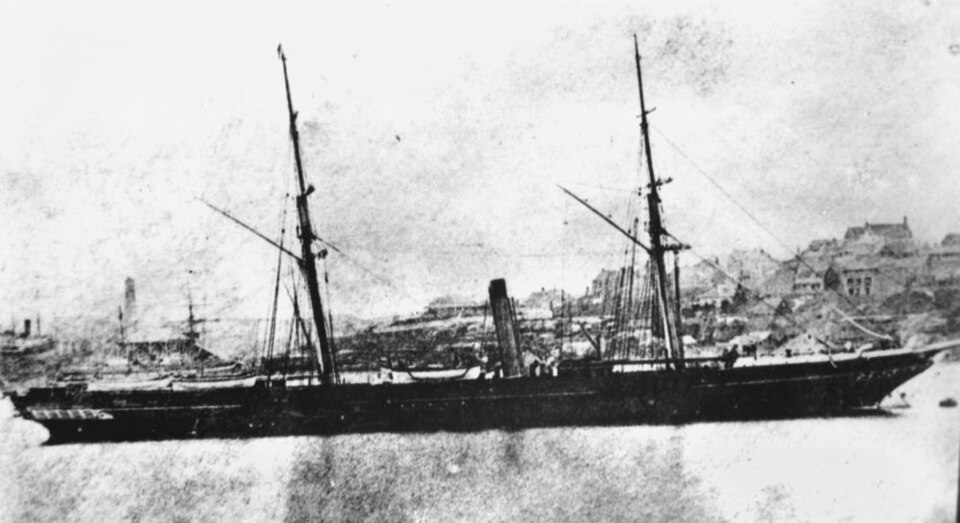
Tahiti or AthenicOutward troopship, Main Body, 16 October 1914Online Cenotaph names both vessels and does not decide between them; not confirmed.RuahineReturn to New ZealandHMNZT Ruahine left England 3 November 1919; he disembarked at Wellington on 26 December 1919.StateLibQld 1 169007 Ruahine (ship) · Public domain · Wikimedia Commons
Afterwards
After the war Stewart went back to Canterbury College, where he was more interested in administration than teaching, and he missed out on the rectorship in college politics. His history of the New Zealand Division in France was published in 1921 and was the main reference for decades. He led the Returned Soldiers' Association nationally, then took a chair at Leeds in 1926 and the principalship of University College, Nottingham in 1929, where he was later judged the most able leader the college ever had. His personal life carried heavy losses: his first wife died in 1920 after childbirth, and his second wife and their baby son died in 1928. He married a third time in 1930 and had two more children.
He died suddenly at sea in September 1934 aboard the Akaroa, returning from a holiday in New Zealand, and was buried at sea. He is remembered by Hugh Stewart Hall and a scholarship at the University of Nottingham, and by a tablet unveiled in Christchurch in January 1935 at the Returned Soldiers' Association premises. The Press called him a man whose personality nobody who met him forgot.
This is the Service Record sign as we would make it from his record: his rank, name, regiment, number and date of embarkation. The medals on the sign are worked out automatically, so the medals listed above are the ones to rely on.
The Service Record
Photograph
We haven’t hosted a photograph here
Rather than copy someone else’s image onto our own site, we’d rather send you to see it where it’s properly held: his full record at the Auckland War Memorial Museum’s Online Cenotaph.
Identity: the Online Cenotaph man (6/982) is the same person as Wikipedia's classical scholar Hugh Stewart (Canterbury College professor, later principal of Nottingham). The earlier candidate note telling the page owner not to confuse them was wrong. A second Online Cenotaph record, C91973 (service number 47092), is a different Hugh Stewart.
All five gazette-dated awards (MC, Croix de Guerre, DSO, Bar to DSO, CMG) were checked by reading the gazette page and finding his name; the citation wording for the DSO, bar and CMG is from McDonald, which quotes the full text.
Croix de Guerre and MC: no individual citation exists. The link between the MC and the 4/5 June 1915 Quinn's Post sortie is probable (Wikipedia, plus the battalion history's account of his leading and being wounded in it) but not proven by the gazette.
Online Cenotaph award dates differ from the gazette: Croix de Guerre 31 May 1917 (gazette 24 Feb 1916), DSO 15 June 1917 (gazette 4 June 1917).
Death date: Te Ara and Wikidata say 28 September 1934, Wikipedia says 21 September; the news was cabled to New Zealand on 28 September 1934 (Auckland Star 29 Sept). Not resolved.
Mentions in despatches: five (Cenotaph, McDonald, Wikipedia, Auckland Star) versus four (Te Ara). All five found in the gazette.
August 1915 posting: Online Cenotaph says he was moved to the Auckland Battalion as temporary major on 11 August 1915; the Canterbury Regiment history says he commanded the Otago Battalion 11 to 24 and 27 to 31 August. Not resolved; omitted from the awards stories.
Promotion to major: August 1915 (Cenotaph, and the 1916 gazette already shows him as temporary major) versus October 1915 (Te Ara, Wikipedia).
The 1914-15 Star is an inferred entitlement and is not on the Online Cenotaph award list. totalMedalsCount of 8 = MC, Croix de Guerre, DSO, Bar, CMG, 1914-15 Star (inferred), British War Medal, Victory Medal; the five MiDs are not counted as medals. Without the Star the count is 7.
Outward ship is uncertain (Tahiti or Athenic per Cenotaph).
Birthplace: Online Cenotaph (from Peter Dennis, UNSW Canberra) gives Aberdeen; Te Ara gives Premnay, East Aberdeenshire.