First Contingent 1899 · Boer War (DCM) · Wellington Mounted Rifles 1914-1919 (DSO and Bar) · Second World War
Colonel James Whyte
James Henry Whyte sailed on the Waiwera in 1899 as an Auckland civil servant in the ranks and came home from South Africa with the Distinguished Conduct Medal. He rose to be one of New Zealand's most decorated mounted riflemen: second-in-command of the Wellington Mounted Rifles at Gallipoli, then its commanding officer in Sinai and Palestine, and the winner of the Distinguished Service Order and a bar to it.
He served New Zealand in three wars. After retiring from the Staff Corps he offered his services again in 1939 and spent the Second World War organising coast patrols and conducting troop drafts overseas.
His story
From Clevedon to the Auckland Post Office
James Henry Whyte was born on 12 December 1876 at Clevedon, south of Auckland, and grew up in the Auckland area. His mother, Jane Whyte, lived at Seccombe Road, Mt Eden. By 1899 he was a civil servant in Auckland and was single. The Masonic Great War Project says he first joined the Army in 1897.
Source: Online Cenotaph record C58489; NZHistory Boer War roll (james-henry-whyte); NZEF Project (nzef.adfa.edu.au pid 273499); Rotorua Morning Post 5 Nov 1951; Masonic Great War Project legend 3755Sailing with the First Contingent
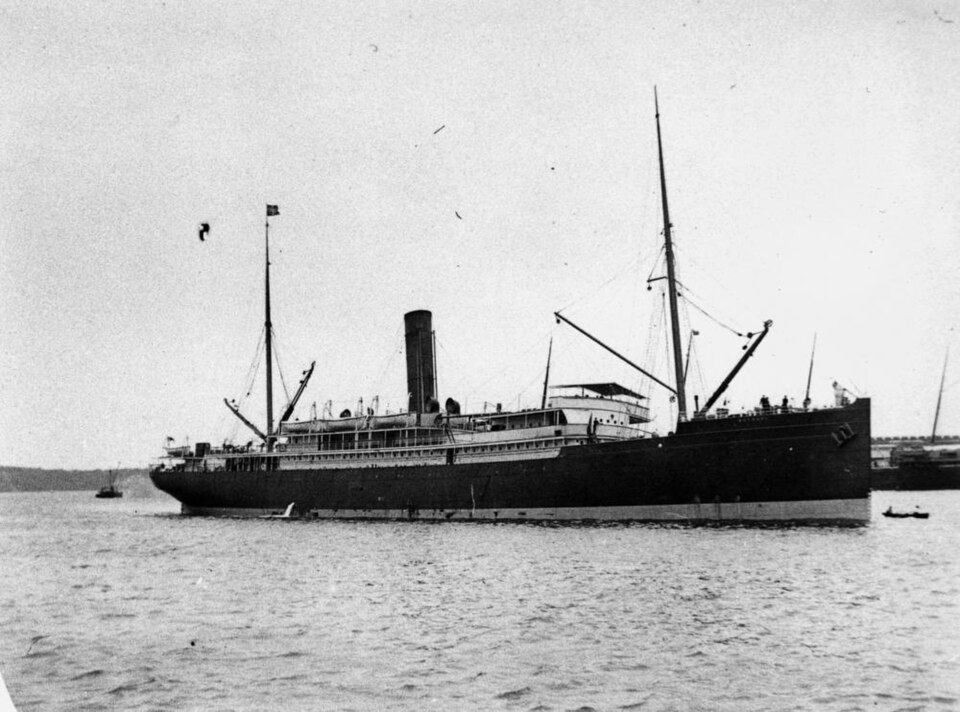
He was selected for the First Contingent as a private in No. 1 Company (service number 95) and sailed from Wellington on the Waiwera on 21 October 1899. He was nearly 23.
Source: Online Cenotaph record C58489; NZHistory Boer War rollKimberley, Driefontein and a close call
The Cenotaph lists him at the Relief of Kimberley (he was at Kimberley camp in February 1900), Driefontein, Johannesburg and Diamond Hill, and records that he was thought an excellent soldier and comrade. At Koornspruit a bullet passed through his bayonet scabbard and into his horse. In 1901 he became seriously ill with enteric fever and went home on the SS Orient in January 1901.
Source: Online Cenotaph record C58489 (citing Stowers, Kiwi versus Boer, p.181); Masonic Great War Project legend 3755Back to South Africa as a sergeant, then an officer
Recovered, he joined the 7th Contingent (No. 4056) as a sergeant and sailed again from Wellington on the Gulf of Taranto in April 1901. He was later commissioned in the 10th Contingent, and the Distinguished Conduct Medal, awarded for his South African service, is recorded on the Cenotaph as October 1902. Papers Past reporting in 1919 and 1951 confirms that he won the DCM in the Boer War.
Source: Online Cenotaph record C58489; Papers Past, Manawatu Times 18 Feb 1919; Rotorua Morning Post 5 Nov 1951A regular soldier
He stayed in the service. He is recorded as commanding the Auckland Company of the Auckland Mounted Battalion in 1902, became Deputy Assistant Quartermaster-General for the Auckland Volunteer District in 1907, and attended a course at Sandhurst in 1909. He was then posted to the Army office at Palmerston North with the rank of major.
Source: Online Cenotaph record C58489 (citing Stowers p.181); Rotorua Morning Post 5 Nov 1951Second-in-command of the Wellington Mounted Rifles
When the Main Body was formed, Captain J. H. Whyte of the Staff Corps was named second-in-command of the Wellington Mounted Rifles Regiment under Lieutenant-Colonel William Meldrum. His quartermaster was a fellow First Contingent man, Hon. Captain A. H. Wilkie. He embarked from Wellington on the Orari (HMNZT 6) on 16 October 1914.
Source: Papers Past, Evening Post 24 Aug 1914; Online Cenotaph record C58489; Online Cenotaph record C58545 (Wilkie)Gallipoli and the DSO
Whyte served right through the Gallipoli campaign. The Masonic Great War Project says he distinguished himself in the attack on Hill 60 on 27 August 1915. As a major he was appointed a Companion of the Distinguished Service Order for distinguished service in the field during the operations at the Dardanelles (London Gazette, 8 November 1915), and was mentioned in despatches in the gazettes of 5 November 1915 and 28 January 1916.
Source: Online Cenotaph record C58489; Papers Past, Manawatu Times 18 Feb 1919; Otago Witness 19 Jan 1916; Masonic Great War Project legend 3755Sinai and Palestine: command of the regiment
He continued with the regiment through Sinai and Palestine. When Meldrum was promoted to command the Mounted Rifles Brigade, Whyte took command of the Wellington Mounted Rifles on 8 June 1917. Wikipedia reports that he was injured in an aeroplane crash on 17 February 1918 during the Jordan Valley operations. He won a Bar to the DSO (London Gazette, 1 January 1918), awarded while acting as Brigade Major of the 2nd Australian Light Horse Brigade, and was mentioned in despatches further times in 1916, 1917 and 1918.
Source: Online Cenotaph record C58489; Wikipedia, Wellington Mounted Rifles Regiment; Papers Past, Manawatu Times 18 Feb 1919; NZEF Project pid 273499Home on the Moeraki
Lieutenant-Colonel Whyte, DSO, DCM, returned to Wellington on the Moeraki on Thursday 13 February 1919. The Manawatu Times described him as having a reputation as a brilliant leader in the field who was much liked by his men.
Source: Papers Past, Manawatu Times 18 Feb 1919; New Zealand Times 7 Oct 1919 (placed on the New Zealand roll)Honours and civic service
He was made an honorary aide-de-camp to the Governor-General in 1930 and was a member of the Wanganui Education Board from 1933 to 1940. The Cenotaph records his inter-war rank as Lieutenant-Colonel, Wellington Mounted Rifles, on 18 December 1936, and his obituary says he retired on superannuation about six years before the Second World War.
Source: Rotorua Morning Post 5 Nov 1951; Online Cenotaph record C58489A third war
In 1939 he offered his services free, organised coast patrol units in the Auckland province, and was later conducting officer for reinforcement drafts, making several trips to the Middle East and South Pacific. The Cenotaph records him as a Colonel in the Ships' Permanent Staff of the Second NZEF, Officer Commanding Troopships for Africa and the Pacific (2 May 1945).
Source: Rotorua Morning Post 5 Nov 1951; Online Cenotaph record C58489Death at Taihape
Colonel Whyte died at Taihape on Saturday 3 November 1951. A funeral with full military honours was held at Taihape Cemetery on 6 November, organised by the Waiouru camp staff; former members of his old regiment, the Wellington Mounted Rifles, were pallbearers at the church, and the firing party came from the Royal New Zealand Armoured Corps at Waiouru. He was survived by his wife and three children.
Source: Papers Past, Evening Post 7 Nov 1951; Rotorua Morning Post 5 Nov 1951
Rank and insignia
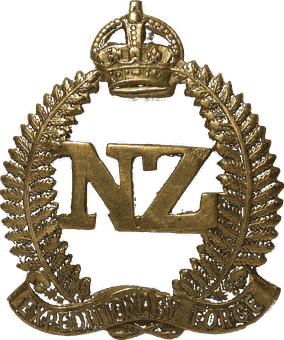
The rank he held, and the badge a soldier of that rank wore. These are simplified illustrations.
His medals
“Documented” means a source we name says he received it. “Listed on the Online Cenotaph” means the museum’s record lists the medal but we could not confirm it elsewhere. “Entitled” means his service dates qualified him, but we have not seen a record of the medal itself. The drawings are simplified illustrations.
His ships
Afterwards
After the First World War Whyte stayed in the military and civic life of the lower North Island, was honorary ADC to the Governor-General from 1930, and served on the Wanganui Education Board. In the Second World War he offered his services again and rose to Colonel. He died at Taihape on 3 November 1951, aged 74, and was buried in Taihape Cemetery with full military honours. He is also named on the Onehunga South African War memorial tablet at Waikaraka Cemetery.
His sign
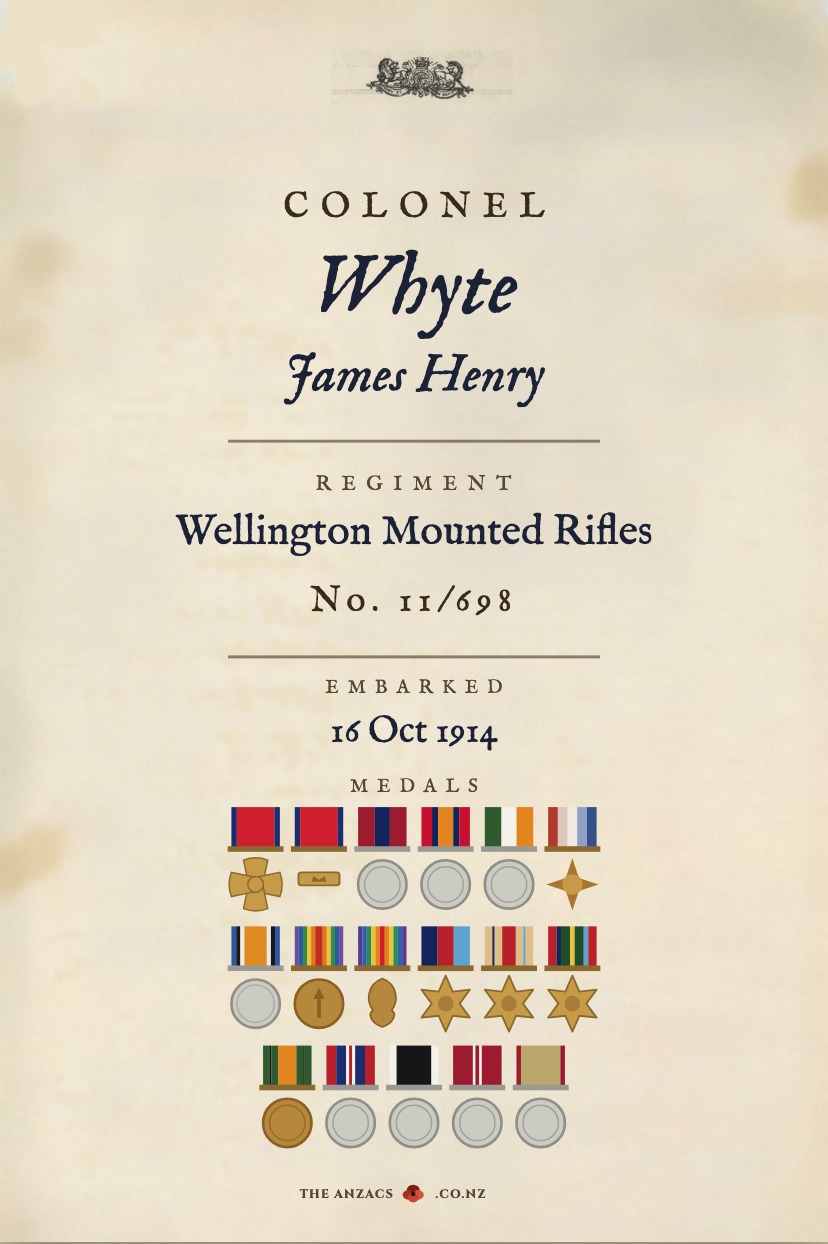
This is the Service Record sign as we would make it from his record: his rank, name, regiment, number and date of embarkation. The medals on the sign are worked out automatically from the embarkation date, so the medals listed above are the ones to rely on.
Photograph
We haven’t hosted a photograph here
Rather than copy someone else’s image onto our own site, we’d rather send you to see it where it’s properly held: his full record at the Auckland War Memorial Museum’s Online Cenotaph.
Sources
- James Henry Whyte, Online Cenotaph, Auckland War Memorial Museum.
- NZHistory, Boer War roll: James Henry Whyte
- NZEF Project, James Henry Whyte
- Papers Past, Evening Post 24 Aug 1914 (Appointments to commissions)
- Papers Past, Otago Witness 19 Jan 1916
- Papers Past, Manawatu Times 18 Feb 1919
- Papers Past, Rotorua Morning Post 5 Nov 1951
- Papers Past, Evening Post 7 Nov 1951
- Wikipedia, Wellington Mounted Rifles Regiment
- Masonic Great War Project, James Henry Whyte
What we could not confirm
Birth: Cenotaph 12 Dec 1876 (place not given); NZEF Project and Papers Past obituary say Clevedon. The Masonic Great War Project says 17 Dec 1878 at Woodlands, Auckland, which conflicts; the 1951 age at death (74 per Cenotaph/NZEF, 75 per one obituary) fits 1876.
Marriage: the Masonic Great War Project says he married Dorothy Ann Rose in Cairo on 4 April 1916; not confirmed elsewhere. His 1951 obituary says he was survived by his wife, two daughters and a son. Cenotaph shows him single in 1899 and 1914.
Number of mentions in despatches: Cenotaph lists five gazette dates; 1951 obituary says six.
Boer War timeline is partly from Stowers via the Cenotaph (Orient Jan 1901, Gulf of Taranto Apr 1901, sergeant No. 4056 in the 7th Contingent, lieutenant in the 10th). The Cenotaph's wording 'Sergeant Major Lieutenant of 10 NZMR' is garbled; exact 10th Contingent rank and date not verified. His obituary says South African service 1899-1901.
Cenotaph says the Bar to the DSO was awarded as Lieutenant-Colonel; the aeroplane crash on 17 Feb 1918 comes from Wikipedia only.
Whyte's rank on arrival in 1914: the Aug 1914 Evening Post names Captain J. H. Whyte NZSC as second-in-command; Manawatu Times 1919 says he was 'Brigade-Major' when war broke out. The 1951 obituary says he had the rank of major at Palmerston North before the war (the Cenotaph says Captain at embarkation).
Cenotaph also records him as Auckland Mounted Rifles and College Rifles earlier in his career; dates not given.
Inter-war rank date (18 Dec 1936) and WWII Colonel date (2 May 1945) come from the Cenotaph only.